
Frugalpac terms and conditions for the purchase of goods

Top 10 Ways to Reduce Your Wine Carbon Footprint

Reducing a wine carbon footprint begins with a simple question: where does the largest environmental impact occur?

For most bottles, the answer is not only the vineyard. Heavy glass, refrigeration, irrigation, winery electricity, packaging, and long-distance transport all matter. A bottle may begin beside sunlit vines, yet travel thousands of miles before reaching a dinner table. That journey deserves closer attention.

Allison Jordan, a recognized wine sustainability leader and former Wine Institute environmental affairs executive, has said, “Sustainability is a journey, not a destination.” This principle shapes the ten practical approaches explored in this guide. The focus is measurable progress, not polished claims.

The discussion will examine lighter bottles, recycled materials, efficient water use, renewable energy, healthier soils, responsible farming, shorter supply chains, and smarter shipping. It will also consider winery waste and transparent carbon measurement. These choices can reduce emissions without ignoring wine quality, regional identity, or business realities.

Small changes matter.

A lighter bottle can reduce transport emissions immediately. Cover crops may protect soil while supporting biodiversity. Better irrigation can save water during dry seasons. Yet no solution works everywhere. A vineyard in a cool region faces different challenges from one in a drought-prone valley.

I will not pretend that every recommendation is equally easy or affordable. Some wineries need major investment. Some consumers have limited choices. Carbon calculations can also contain gaps, especially across complex supply chains. Honest sustainability requires acknowledging those weaknesses.

The goal is practical learning: understand the evidence, question broad promises, and choose realistic actions that steadily reduce a wine carbon footprint.
Top 10 Ways to Reduce Your Wine Carbon Footprint

Assess Wine’s Carbon Footprint Across the Entire Production Cycle

Top 10 Ways to Reduce Your Wine Carbon Footprint

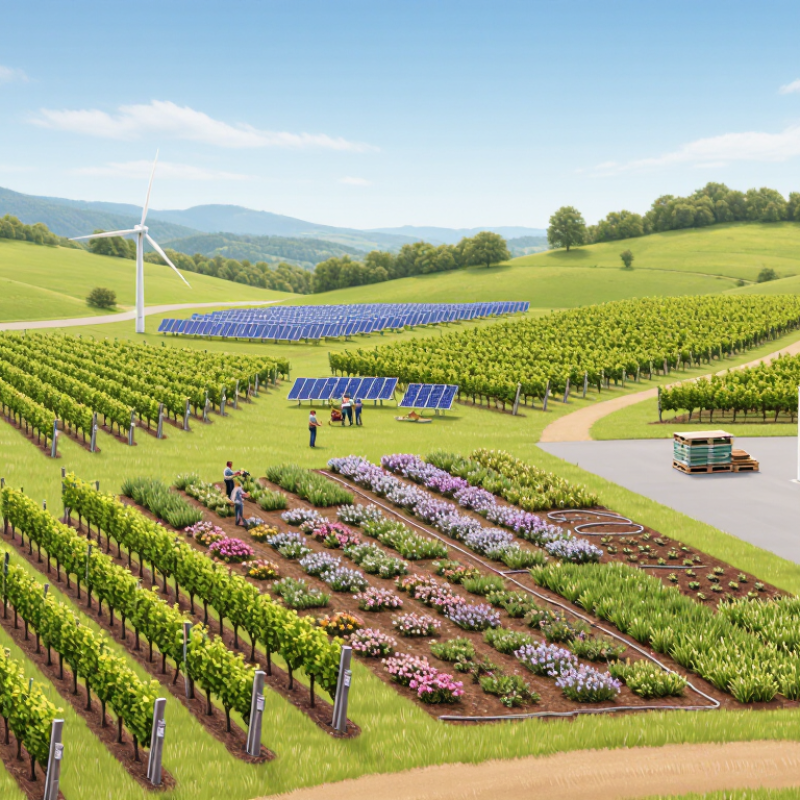
Assessing wine requires more than counting vineyard emissions. The International Organisation of Vine and Wine reports that vineyards face rising climate pressure. Track fuel, electricity, fertilizer, irrigation, and soil emissions across each block. Use cover crops to protect soil. Apply nitrogen carefully, because excess fertilizer can create nitrous oxide. Improve pumping schedules and repair leaks. Solar power can reduce cellar electricity, although installation impacts deserve attention too.

Packaging often changes the result dramatically. The Carbon Trust estimated about 1.28 kilograms of CO2e for a 750-millilitre wine bottle. Its assessment identified glass production as a major source. Choose lighter bottles, recycled content, or lower-impact containers where quality allows. Ship wine in bulk when suitable, then package closer to consumers. This can reduce unnecessary container weight. Prefer rail or sea freight over air freight. Store wine in energy-efficient warehouses. Avoid excessive refrigeration.

The life cycle continues after purchase. Encourage reuse where local systems can wash containers safely. Design labels, closures, and cartons for easier recycling. Measure transport distances instead of assuming “local” always means lower carbon. A 2012 life-cycle study in the Journal of Cleaner Production found packaging and distribution could strongly influence wine’s footprint. Results vary by climate, yield, bottle weight, and consumer travel. That uncertainty matters. A small producer may lack perfect data, and my own audit could miss supplier emissions. Use verified activity data, document assumptions, and review them annually.

Choose Lower-Impact Vineyards and More Sustainable Farming Practices

A lower-carbon wine often begins long before harvest. Choose vineyards that publish farming data, not vague green promises. The IPCC’s Sixth Assessment Report estimates that agriculture, forestry, and land use produced 13–21% of global greenhouse gas emissions from 2010 to 2019. Vineyard decisions matter within that wider system.

Start with the soil. Look for cover crops between vine rows, compost made from verified sources, and reduced tillage. These practices can protect soil carbon and reduce erosion. The FAO’s 2022 State of Food and Agriculture report identifies improved soil, nutrient, and water management as key climate actions.

Drip irrigation can also limit pumping, but it is not automatically sustainable. Poorly managed systems may still waste water.

Ask for evidence. Field records should show fertilizer rates, irrigation volumes, fuel use, and renewable-energy progress. The OIV’s 2023 State of the World Vine and Wine Sector report places global vineyard area at roughly 7.2 million hectares. That scale makes small improvements meaningful.

A vineyard walk after rain can reveal more than a glossy certificate: bare soil, muddy runoff, or healthy ground cover are visible clues. No vineyard is impact-free. Even regenerative claims need independent measurement, local context, and honest limits.

Prefer Lightweight Bottles, Alternative Packaging, and Recycled Materials

Top 10 Ways to Reduce Your Wine Carbon Footprint

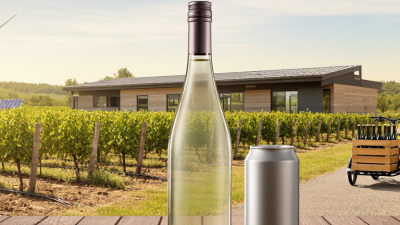
Wine packaging can create a large share of its carbon footprint. Lightweight bottles usually need less raw material and fuel during transport. A heavy bottle may feel premium, but weight alone does not improve the wine. Look for sturdy bottles that are noticeably slimmer and easier to lift. Smaller bottle sizes can also reduce waste when one glass is enough. This is not a perfect equation.

Alternative packaging deserves attention. Boxed wine uses a durable outer carton and a flexible inner pouch, reducing shipping weight and breakage. Cans can suit outdoor occasions, while cartons may use less material than traditional glass. However, local recycling systems differ. Check whether your area accepts the full package, not only one part. Recycled glass lowers demand for new raw materials, but it still requires collection, sorting, and energy. Reuse sounds ideal, yet cleaning and returning containers can add emissions if transport distances are long.

Tips: Choose the lightest suitable bottle. Buy larger formats when storage is practical. Select recycled-content packaging. Flatten cartons before recycling. Avoid shipping air.

I still choose glass for some wines. Familiar habits matter. But asking where the package goes after opening can expose weak assumptions. Packaging decisions should consider distance, local infrastructure, and actual reuse rates—not appearance alone.

Top 10 Ways to Reduce Your Wine Carbon Footprint - Prefer Lightweight Bottles, Alternative Packaging, and Recycled Materials
No. Carbon-Reduction Measure Practical Specification Typical Potential Reduction Why It Helps
1 Choose lightweight glass bottles Use a bottle weighing approximately 350–450 g instead of a conventional 550–750 g bottle, where product requirements allow. Approximately 10–25% lower bottle-related emissions Less glass requires less raw material, furnace energy, and transport fuel. Bottle weight is often one of the largest controllable packaging variables.
2 Use bag-in-box packaging Package wine in a recyclable carton with a flexible inner bag for suitable wines and distribution periods. Approximately 40–60% lower packaging and transport emissions The format uses substantially less material and is lighter per litre than single-use glass bottles. Actual savings depend on recycling and transport distances.
3 Consider recycled PET or other lightweight formats Use food-contact packaging with a verified recycled-material content and a well-established collection route. Approximately 20–45% lower packaging emissions than standard glass Lightweight polymers can reduce production and freight energy. The result depends on recycled content, package size, barrier requirements, and end-of-life management.
4 Increase recycled content in glass Use bottles containing a high, verified proportion of post-consumer cullet where local supply and quality standards permit. About 2–3% lower furnace energy for each additional 10% of cullet Recycled glass melts at a lower temperature than virgin raw materials, reducing furnace fuel use and the need to extract new minerals.
5 Avoid air freight Move wine by sea, rail, or efficient road freight whenever delivery time and route planning allow. Often more than 80% lower transport emissions than air freight Air freight has a much higher energy intensity per tonne-kilometre than maritime, rail, or road transport. Exact savings vary by route and load factor.
6 Ship full pallets and optimize logistics Consolidate orders, improve pallet utilization, reduce empty return trips, and use route planning to increase load factors. Approximately 5–15% lower freight emissions per delivered litre Higher vehicle utilization spreads fuel use across more product and reduces avoidable journeys, warehouse movements, and secondary packaging.
7 Reduce secondary packaging Use right-sized cases, recycled cardboard, minimal inserts, and water-based or low-impact printing where protection requirements permit. Approximately 5–15% lower packaging-related emissions Less cardboard, ink, adhesive, and void fill reduce material production and disposal impacts. Recycled fibre generally has a lower material footprint than virgin fibre.
8 Power winery operations with renewable electricity Use on-site solar generation or a credible renewable electricity supply for refrigeration, pumping, bottling, and administration. Approximately 10–30% lower winery operational emissions Electricity is commonly used for cooling, pumps, lighting, and processing. The reduction depends on the original grid carbon intensity and the renewable energy share.
9 Improve vineyard soil and fertilizer management Use soil testing, precision application, cover crops, compost where appropriate, and efficient nitrogen management. Approximately 5–20% lower vineyard emissions Nitrogen fertilizer production and field emissions can be significant sources of agricultural greenhouse gases. Better application reduces excess inputs and nitrous oxide risk.
10 Reuse or refill suitable containers Use durable bottles or refill systems only where collection, washing, inspection, and return transport are efficiently managed. Potentially 20–50% lower container emissions after repeated use Reuse spreads the manufacturing impact across multiple cycles. Benefits depend on the number of rotations, washing energy, breakage, and average return distance.
Data note: The reduction figures are indicative ranges based on published life-cycle assessment findings and packaging-sector benchmarks. They are not additive: combining measures requires a product-specific assessment covering materials, production, transport, use, recycling, and end-of-life treatment.

Reduce Emissions from Wine Transportation, Storage, and Serving

Top 10 Ways to Reduce Your Wine Carbon Footprint

Reduce Emissions from Wine Transportation, Storage, and Serving

Wine’s carbon footprint often grows before the bottle reaches your table. Choose nearby producers when quality and availability allow. Shorter transport routes usually require less fuel. Ask retailers about consolidated deliveries instead of urgent, separate shipments. Air freight is especially emissions-intensive, so avoid it when ground or sea transport works.

Packaging also matters. Lighter bottles generally require less energy to produce and move. Reuse sturdy shipping boxes for future purchases. At home, store wine in a cool, stable place, away from sunlight, ovens, and radiators. A cellar around 12–16°C can reduce the need for constant cooling. An energy-efficient wine fridge may help, but an oversized unit can waste electricity. I have made that mistake.

Serving choices create smaller, repeated impacts. Open only the amount guests are likely to drink. Use a reliable stopper for unfinished wine, and keep it appropriately chilled when needed. Washing several glasses in a fully loaded dishwasher is often more efficient than repeated hand-washing, especially with hot running water. Serve tap water in reusable glassware rather than disposable bottles.

Not every “green” option fits every household. A heavy bottle may protect a delicate wine, while a lightweight one may not suit long storage. Track your energy use, delivery habits, and waste for a month. The results may challenge your assumptions. Small adjustments become meaningful when repeated across every bottle.

Support Producers That Measure, Report, and Improve Climate Performance

Top 10 Ways to Reduce Your Wine Carbon Footprint

Support Producers That Measure, Report, and Improve Climate Performance

Choose producers that publish measurable climate data, not broad sustainability promises. The GHG Protocol recommends separating direct emissions from purchased energy and value-chain emissions. This distinction matters. A winery may reduce cellar electricity while ignoring glass production, refrigeration, or freight.

Peer-reviewed research by Poore and Nemecek, published in Science in 2018, estimated wine’s average footprint at about 1.79 kilograms of CO2e per kilogram. That figure is global and imperfect. It still shows why packaging and transport deserve attention. Ask whether a producer reports emissions per bottle, per litre, or per case. These units are not interchangeable. Look for progress across several years, verified boundaries, and explanations for missing data. Start with evidence.

Reliable reporting should also connect targets with practical changes. These may include lighter bottles, renewable electricity, soil-carbon monitoring, water-efficient irrigation, and lower-emission logistics. ISO 14067 provides a recognized framework for product carbon-footprint accounting. Independent assurance adds credibility, especially when reductions are claimed. Numbers matter.

Improvement rarely looks tidy. A drought year can increase irrigation energy, while a new measurement system may reveal higher emissions. That is not failure. Honest reporting should explain setbacks, revised methods, and corrective actions. Consumers can reward that transparency by choosing producers that measure, disclose, and repeatedly improve climate performance, rather than those offering only attractive environmental language.

Top 10 Ways to Reduce Your Wine Carbon Footprint

Support Producers That Measure, Report, and Improve Climate Performance

Transport emissions vary greatly by freight mode. Air freight produces far more greenhouse gas emissions per tonne-kilometre than sea, rail, or road freight. Choosing producers that measure logistics emissions, report their methods, and reduce air transport can make wine purchasing more climate-conscious.

Data source: UK Government GHG Conversion Factors for Company Reporting, 2024. Values are rounded average emissions factors in grams of CO₂e per tonne-kilometre.

Close