

Choosing Printed Aluminium Foil is not just a matter of selecting an attractive design. The right material depends on what it will package, how it will be stored, and how customers will handle it. A wrapper for dry snacks may need different barrier properties from one used for products sensitive to moisture, light, or oxygen. Even a small detail, such as a seal edge or fold, can affect how the package performs.
Print quality matters, too. Colors should look consistent, text should remain clear at the intended size, and the ink should suit the packaging process. Ask suppliers for a detailed specification sheet and physical samples. A screen image can look convincing; a real sample reveals more. Check its thickness, flexibility, finish, and print registration under ordinary lighting. Then consider the order quantity, lead time, and storage conditions, since these can influence both cost and practical use.
The seven tips in this guide will help buyers compare options with more confidence. They cover material suitability, print requirements, supplier questions, sampling, pricing, and quality checks. No single foil works for every application. Some details may also be overlooked during an early review, so confirm important assumptions with your packaging or production team before placing a large order. Take your time. A careful comparison can prevent avoidable surprises and lead to packaging that looks right and works reliably.
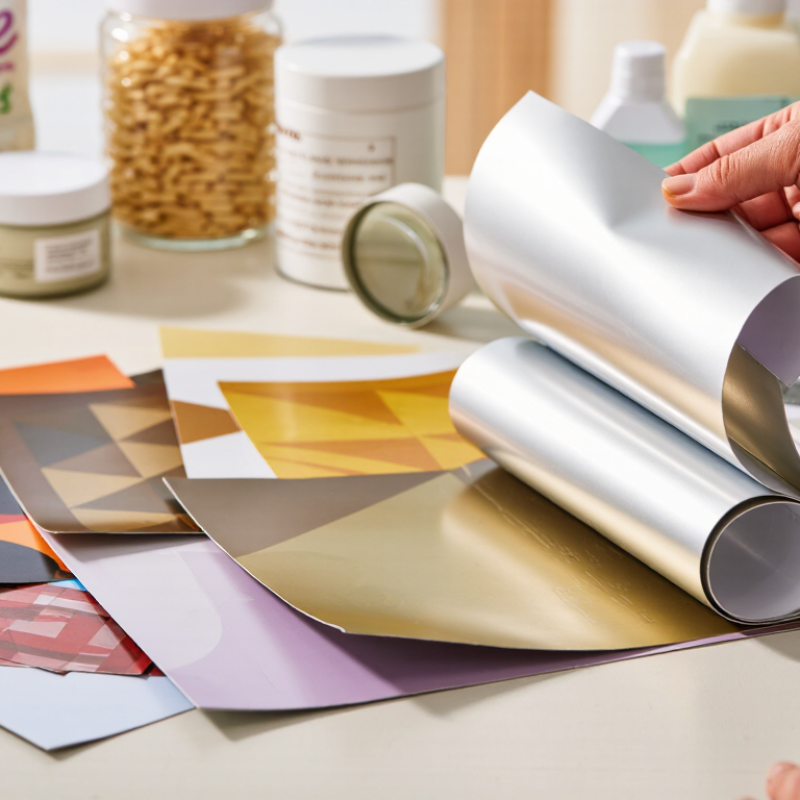
Identify the job before comparing printed aluminium foil samples. A wrapper for dry tea needs different protection from a pouch holding oily snacks. Consider moisture, oxygen, light, temperature, and how the package will be sealed. Looks matter. But performance matters more. A bright design cannot compensate for foil that wrinkles on the filling line or fails to protect the contents.
Check the foil’s thickness, temper, barrier performance, and compatibility with the package structure. Ask whether the printed surface needs to resist rubbing, heat, or contact with other materials during storage. If the foil will be sealed, request details about the seal layer and test it on your actual equipment. I would be tempted to choose the brightest sample; that is not always the wisest choice. A vivid ink can scuff after handling, so inspect samples after folding and rubbing them gently.
Tips: Describe the product, filling process, and storage conditions to your supplier before requesting a quote. Share practical details, such as whether packs sit in a sunny shop window or travel through humid conditions. Request a small trial roll, then check print clarity, seal strength, and handling on the production line. One detail is easy to miss: a sample that looks perfect on a desk may behave differently at full speed. Recheck your assumptions before placing a large order.
Foil thickness affects more than stiffness. A thin web can reduce material use, but it may wrinkle or tear during printing and converting. A heavier gauge often runs more steadily, though it can increase cost and resist folding. Compare the stated thickness and tolerance, not just the nominal number. Small differences matter. Ask for samples from the actual production lot, then check for pinholes, creases, and edge damage under good light.
Grade matters too. Alloy and temper influence flexibility, strength, and how well foil holds a fold. A soft grade may suit wraps that need to conform closely; a firmer one may behave better on fast packaging lines. There is no universal best grade. Match the foil to the product shape and forming process, and confirm that its surface and any coating suit the intended use.
Printing suitability deserves a hands-on check. Surface treatment, cleanliness, and coating compatibility can affect ink adhesion and color consistency. Request a printed trial using your design, especially if it includes fine text, solid color areas, or small registration details. Rub the dried print gently and inspect it after folding. A sample can look convincing on a flat sheet, then scuff at a crease. That is easy to overlook. Record the tested thickness, grade, print conditions, and results before approving an order.
Printed aluminium foil can make a pouch feel premium, but artwork must suit the material. Foil reflects light, so pale inks may appear weaker, while fine text can lose definition. Ask for a physical proof on the intended foil, not just a screen mock-up. Compare it under daylight and warm indoor lighting. Small differences show up fast.
Tip: Request color swatches, not only a digital preview. Specify a recognized color reference and agree on acceptable color variation with the printer. Smithers’ 2023 report, The Future of Digital Print for Packaging to 2028, projected the market would grow from $22.5 billion in 2022 to $36.9 billion by 2028. That forecast covers packaging print broadly, not foil alone, but it points to rising demand for customized packaging.
Check samples for registration, sharp edges, pinholes, and scuffing. Ask how the printer controls color and verifies repeat runs; ISO 12647 provides process-control guidance for print production. Test the foil after folding or sealing, since a clean flat sample can hide cracking at creases. I would still question a proof that looks perfect only under one lamp. Before approving production, compare several samples and keep one signed reference for later batches.
| Tip | What to Assess | Practical Checks | What to Agree Before Ordering |
|---|---|---|---|
| 1. Confirm the foil construction | Check the foil alloy, thickness, temper, and whether the product is plain foil or part of a laminated structure. | Match the material to the intended use, forming process, barrier needs, and sealing method. Ask for a specification sheet and sample material. | Material structure, thickness tolerance, roll or sheet dimensions, and intended application. |
| 2. Review design and print-area options | Look at available print methods, repeat length, number of colors, artwork orientation, and printable areas. | Request a production-style proof showing the design at actual size. Check seams, trim areas, registration marks, and any unprinted zones. | Final artwork file, print repeat, layout, color count, and any design limitations caused by converting or sealing. |
| 3. Set color expectations | Assess whether colors remain consistent on reflective aluminium, where the metallic surface can change their appearance. | Review a physical printed sample under consistent lighting. If color measurement is needed, use an agreed color reference and measurement method. | Approved color proof, viewing conditions, measurement method, and acceptable color tolerance. Tolerance should be agreed for the project rather than assumed. |
| 4. Inspect print quality closely | Check sharpness, fine text, solid areas, gradients, registration, and consistency across the printed repeat. | Examine samples for blurred edges, gaps, streaks, smudges, pinholes, uneven coverage, and visible color variation. Verify that small text remains legible at final size. | Reference sample, critical artwork details, inspection method, and criteria for acceptable print defects. |
| 5. Test ink adhesion and durability | Consider handling, winding, folding, forming, and any downstream converting that may affect the printed surface. | Ask for adhesion and rub-resistance tests appropriate to the intended process. Check whether ink cracks, flakes, transfers, or rubs off after conversion. | Relevant test method, sample conditioning, performance expectations, and the production stage at which samples will be evaluated. |
| 6. Verify end-use and compliance needs | For food, pharmaceutical, or other regulated uses, assess the complete material structure—not just the printed foil. | Request applicable declarations and supporting documentation for the intended market and use. Confirm whether a coating or laminate separates ink from the product. | Intended contents, contact conditions, destination market, required documentation, and responsibility for compliance review. |
| 7. Approve a production-representative sample | Check that the sample reflects the proposed material, artwork, print process, and finishing steps. | Review color, print placement, dimensions, winding or sheet presentation, and performance in the actual converting or packaging process. | Signed-off sample, approved specification, sampling plan, delivery format, and process for handling changes between orders. |
When buying printed aluminium foil, define the intended use before reviewing certificates. A foil for dry snacks may need different ink and barrier performance than foil touching moist or acidic foods. Ask for the product specification, food-contact declaration, and relevant migration test reports. Check that tests cover the actual foil, ink, and adhesive combination.
EFSA’s 2008 assessment set a tolerable weekly intake for aluminium of 1 mg per kilogram of body weight (EFSA Journal 754, 1–34). This is a dietary exposure benchmark, not a foil-specific safety limit. Still, it helps explain why suppliers should provide clear, product-specific evidence rather than broad assurances. Verify that certifications are current and cover the supplying site and process. Ask whether quality systems, such as ISO 22000, include printed foil production. Still, paper can mislead.
Supplier reliability also shows in traceability and change control. Request batch records, a sample roll, and written notice procedures for changes to inks or raw materials. Compare promised lead times with documented delivery performance, not just sales estimates. A crisp print sample is useful, but it cannot confirm compliance. I would check the reports independently; that extra step can feel tedious, yet it may reveal gaps before a full order.
When comparing printed aluminium foil, request samples made to the same thickness, alloy, width, and print specification. Check color under the lighting used at your facility. Rub the surface with a clean, dry cloth, then inspect registration, coating, and edge quality. A beautiful sample is not enough. Test it on your actual filling or wrapping line; a small mismatch in stiffness or roll tension can cause downtime.
Compare prices on a like-for-like basis. Separate foil, printing plates, setup charges, cores, freight, and inspection fees. Confirm whether the quoted price applies to your exact order quantity, since a low unit price may depend on a large minimum run. Ask for overrun and waste allowances in writing. I would not treat one quote as definitive; suppliers may calculate yield differently, and that detail is easy to miss.
Define delivery terms with a named destination, dispatch date, transit estimate, and responsibility for freight and insurance. The World Bank’s 2023 Logistics Performance Index assessed 139 economies, including timeliness and shipment tracking. UNCTAD’s Review of Maritime Transport 2024 reported that seaborne trade grew 2.4% in 2023, a reminder that transport conditions can shift. Build a realistic buffer. Confirm partial-shipment rules and what happens if goods arrive late or damaged. Then get the agreed specifications and remedies in the purchase order.