Why Use Seaweed Extract Fertilizer?
Seaweed Extract Fertilizer is often discussed as a gentle way to support plant growth, but what does it actually offer? Made from processed marine algae, these products may contain compounds that influence roots, leaves, and plants’ responses to stress. Their composition varies with seaweed species, harvest conditions, and manufacturing methods. That detail matters. A bottle’s color or kelp scent cannot tell you how it will perform in your garden.
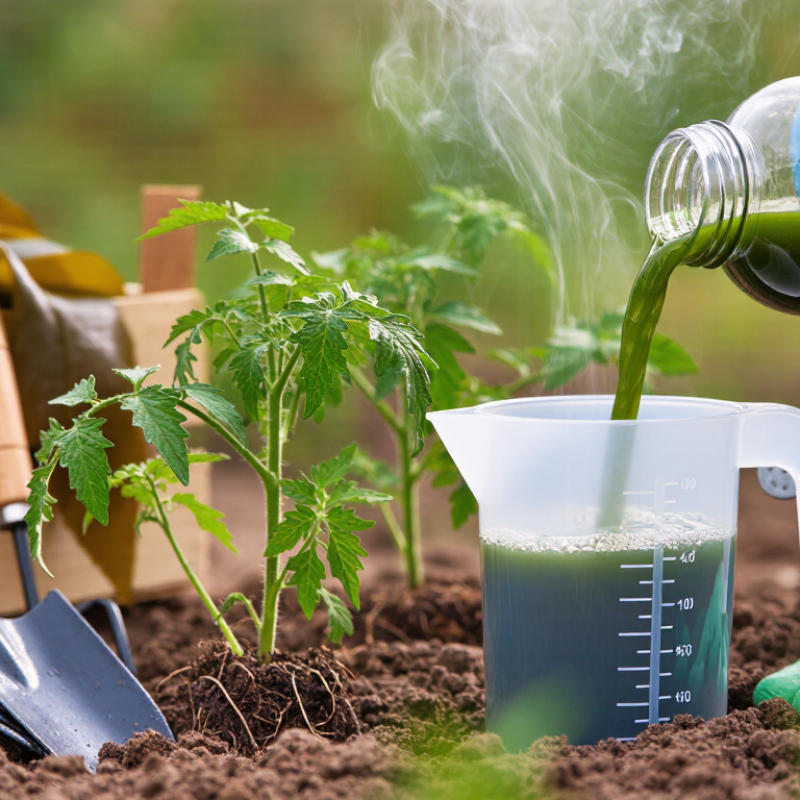
Seaweed researcher John W. Craigie writes, “Seaweed extracts have been used in agriculture for centuries.” His review helps place modern products in a longer agricultural history, while reminding readers that “seaweed extract” is not one uniform ingredient. In practice, a grower might dilute a labeled product and apply it around tomato roots, then watch new growth over several weeks. Results can depend on crop, soil, weather, and application rate. They are not guaranteed.
The appeal is clear. Seaweed extracts can complement a sound feeding plan, and some products provide trace nutrients or bioactive compounds. But they should not automatically replace a balanced fertilizer or correct every deficiency. Check the label, follow its directions, and compare plant response with untreated plants when practical. Small trials help. So does patience.
The evidence is promising, though not perfectly neat. Studies use different extracts and growing conditions, making broad claims difficult to apply to every backyard bed. This guide explores why gardeners use Seaweed Extract Fertilizer, what benefits may be realistic, and where careful expectations matter most.
Seaweed Extract Fertilizer: FAO Recorded 35.8 Million Tonnes of Algae in 2019
In 2019, the Food and Agriculture Organization recorded 35.8 million tonnes of algae production worldwide. That figure shows the scale of a resource used for food, industry, and agricultural inputs. It does not mean 35.8 million tonnes became fertilizer. Much harvested seaweed is processed for other uses, and fresh biomass contains substantial water. Still, the number helps explain interest in seaweed extracts: coastal crops can provide raw material without competing for arable land.
Seaweed extract fertilizer is better viewed as a plant-supporting supplement than a complete source of nutrients. Depending on the species and processing method, extracts may contain potassium, trace minerals, polysaccharides, and other bioactive compounds. Composition varies. Check the product analysis, follow dilution directions, and test a small area before wider use. A fine spray on tomato leaves may dry quickly; a soil drench reaches the root zone more directly. Neither method guarantees a yield increase. Crop, weather, dose, and timing all matter. Results can be uneven. That is worth admitting. The FAO statistic gives useful context, not proof of farm performance. Reliable decisions rely on composition details, local trials, and careful records of plant growth and harvest weight.
Bioactive Compounds and NPK Content: Why Seaweed Extract Is a Biostimulant
Why Use Seaweed Extract Fertilizer?
Seaweed extract is valued for its bioactive compounds, not just its nutrient content. Depending on the seaweed and extraction process, it may contain alginates, betaines, mannitol, and phenolic compounds. These substances can support root growth and help plants respond to stress, though results vary with crop, soil, and application. That distinction matters. Seaweed extract is a biostimulant, not a guaranteed growth booster.
Its NPK content is often modest and can vary between products. It may contribute small amounts of nutrients, but it should not replace a fertilizer matched to the crop’s needs. Check the product analysis and watch plant growth over time. Pale leaves or weak growth can have many causes, so adding more extract may not solve the problem. Not a complete feed.
Tips: Follow the label dilution rate, and test on a few plants before treating a whole bed. Apply to moist soil or foliage during cooler hours. Keep notes on dose, weather, and visible changes; results can be subtle, and one season may not tell the whole story.
Why Use Seaweed Extract Fertilizer? — Bioactive Compounds and NPK Content: Why Seaweed Extract Is a Biostimulant | Component or measure | What is typically present | Potential role in plants | Practical interpretation |
| Alginates and other polysaccharides | Brown seaweeds commonly contain alginates; the exact polysaccharide profile depends on seaweed species and processing. | May contribute to plant and root responses associated with biostimulant use. | These compounds are not a substitute for a complete nutrient program. |
| Laminarin and fucoidan | Polysaccharides associated mainly with brown seaweeds; amounts in an extract depend on species and extraction method. | Studied for their possible role in plant signaling and stress-response processes. | Presence and concentration should not be assumed without product-specific analysis. |
| Mannitol and other soluble compounds | Mannitol occurs in several brown seaweeds; extract composition varies with raw material and processing. | Can contribute to the mixture of compounds associated with biostimulant activity. | A seaweed extract is a variable biological mixture, not a single standardized active ingredient. |
| Mineral nutrients | Seaweed can contain potassium and smaller or variable amounts of other mineral elements. Levels differ by species, harvest conditions, and processing. | May supply some nutrients, depending on the finished product and application rate. | Check the product label and analysis; mineral content is not consistent across all extracts. |
| Nitrogen (N) | No universal N concentration applies to seaweed extract products. | Supports plant growth when supplied in an available form and at an appropriate rate. | Use the stated N guarantee on the specific product label to calculate nutrient contribution. |
| Phosphorus (P) | The amount varies by raw material and product; there is no standard NPK grade for seaweed extract. | An essential plant nutrient, but its contribution depends on the product’s guaranteed analysis. | Do not rely on a biostimulant as the sole phosphorus source unless its label supports that use. |
| Potassium (K) | Potassium may be present, but its concentration in the finished extract varies and must be verified on the label. | Contributes to normal plant functions when supplied in a usable form. | Compare the declared N-P-K analysis rather than assuming a typical value for all seaweed products. |
| Biostimulant use | A complex extract may contain several bioactive compound groups alongside nutrients. | May support plant processes such as nutrient-use efficiency or tolerance to certain abiotic stresses, depending on crop, product, and conditions. | Results are not guaranteed; follow the label and evaluate performance under local growing conditions. |
| Note: Composition varies with seaweed species, harvest conditions, extraction method, and formulation. Product-specific nutrient guarantees and directions on the label take precedence over general descriptions. |
Crop and Stress Responses: Why Yield Results Vary Across Field Trials
Seaweed extract fertilizers are generally studied as biostimulants, not as substitutes for a crop’s nutrient program. They may influence root development, nutrient-use efficiency, or plant stress responses, but no single pathway guarantees higher yield. Small shifts matter. A response observed in irrigated tomatoes may not recur in dryland wheat or under different soil fertility. Weather at application and crop stage can change the outcome.
Across field trials, heat near flowering may overwhelm a modest treatment effect. Mild drought, however, may reveal differences in leaf recovery or root activity. Stress is not automatically beneficial to the treatment. A sound trial needs untreated controls, replicated plots, the same cultivar, and consistent fertilizer management. Researchers should record rainfall, soil conditions, application timing, and crop quality, not just total harvested weight. Otherwise, interpretation gets messy.
Results also vary with extract source, processing, concentration, and spray coverage. A windy afternoon can leave uneven deposits on leaves. That detail matters. I would be cautious about treating one favorable season as a promise; even well-run trials can disagree. Repeated results across sites and seasons offer a clearer picture, especially when studies report variation and compare the treatment with standard practice.
Foliar or Root Application: Match the Method and Rate to the Product Label
Seaweed extract can support plant growth, but application method matters. FAO’s The State of World Fisheries and Aquaculture 2024 reports 37.8 million tonnes of algae production in 2022, mostly farmed. That figure describes supply, not fertilizer strength. Extracts vary in concentration and formulation, so a rate from one product may not suit another.
For foliar use, dilute only as the label directs and spray a fine mist over leaves, including their undersides. Apply in cooler hours; hot sun can dry droplets quickly.
For root application, pour the labeled dilution around the root zone, preferably onto evenly moist soil. Keep it off dry stems.
Not a universal recipe.
Check whether the label permits both methods, and follow its crop-specific rate and interval. A concentrated foliar mix can mark leaves, while excess root-zone application may waste product.
Seaweed extract is generally used as a biostimulant, not a replacement for a crop’s required nutrients. That distinction is easy to overlook.
Choosing a Product: Compare Guaranteed Analysis, Extraction Method, and Dose
A seaweed extract label should tell you more than “kelp.” Check the guaranteed analysis for nitrogen, phosphorus, potassium, and micronutrients, then compare those figures with your crop’s needs. FAO’s 2024 report recorded 37.8 million tonnes of global algae production in 2022, but that scale does not make extracts interchangeable. Species, harvest conditions, and processing can change the final product. Read the source and analysis closely.
Extraction matters. Cold processing, heat treatment, and alkaline extraction can preserve or alter different compounds, so compare products made from similar seaweed and methods. A 2019 review in Frontiers in Plant Science describes how seaweed extracts vary in composition and plant responses. Dose matters too. Follow the label rate, and test a small plot before treating an entire field. Measure the same crop area, use the same water volume, and record visible changes after application. More is not always better. I would still want clearer independent comparisons; labels alone rarely show how a product performs in your soil, weather, or crop stage.