Who Is the Best Thermal Paper Roll Supplier in China?
Choosing the best thermal paper roll supplier in China is not a simple name search. The right partner must match your printer models, roll dimensions, core sizes, and monthly demand. For buyers, a sample tells a more useful story than a polished catalog. Check print darkness, edge cuts, winding tension, and whether the roll feeds smoothly through a receipt printer. Small details matter. A curled edge or dusty coating can slow a busy checkout counter.
A dependable supplier should explain paper grades, coating options, packing methods, lead times, and inspection steps in clear terms. Ask for current product specifications and relevant quality records, then compare them with a physical sample. The phrase Roll Thermal Paper may describe a broad product range, but not every roll suits every machine or application. That distinction is easy to miss. Price matters, of course, yet a low quotation cannot confirm stable quality or reliable delivery. Look for consistent communication, traceable order details, and a practical response when a batch falls short. There is no universal winner. This guide outlines how to assess Chinese suppliers with evidence rather than claims, while recognizing that buyer needs differ. Even careful checks have limits; samples represent only a point in time. Use them as a starting point, not a guarantee.
Thermal Paper Rolls: Heat-Sensitive Coatings Enable Ink-Free Printing
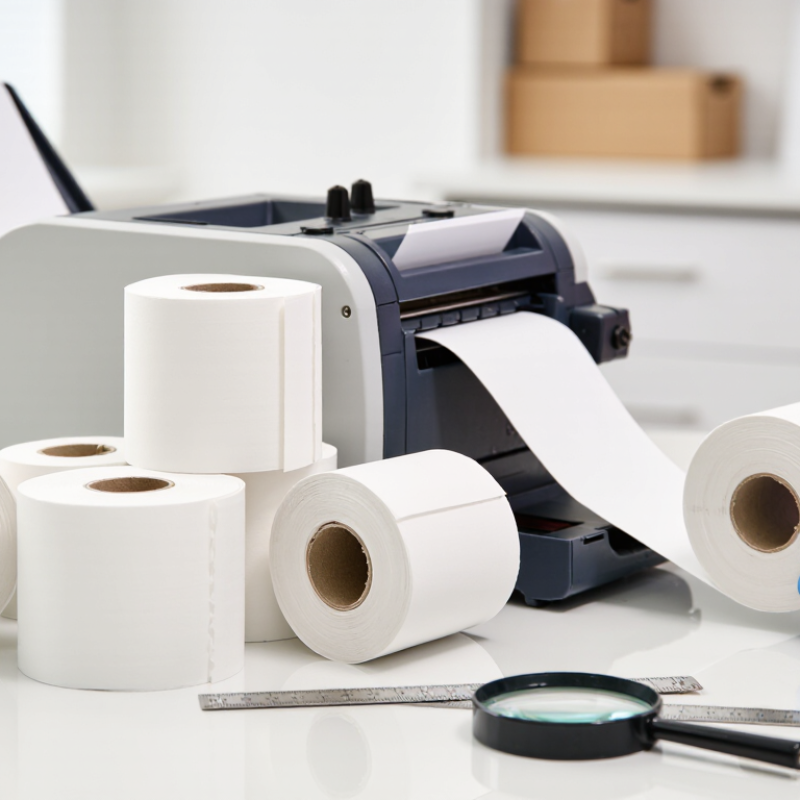
Thermal paper rolls print through heat, not liquid ink. A heat-sensitive coating sits on the paper’s surface. When a thermal print head warms selected spots, the coating darkens and forms letters, prices, or barcodes. Heat does the work. The process avoids ink cartridges, but it depends on consistent contact between the paper and print head.
A reliable supplier in China should explain the paper’s specifications, including roll width, core size, and coating performance. Ask for samples and test them in the printers you actually use. Look for sharp text, even darkness, and clean edges after printing. A faint barcode or patchy receipt can signal a mismatch between paper, printer settings, or coating quality. Small details matter.
Storage matters too. Direct sunlight, high temperatures, and damp conditions can affect print clarity over time. Keep rolls sealed and away from heat where practical. Even good paper has limits; no coating can make every receipt last indefinitely. I would check samples under real operating conditions, rather than trust a specification sheet alone. One overlooked point is that a roll can feel smooth yet still print unevenly. That is worth testing.
Common Roll Specifications: 48–80 g/m² Paper and Core Dimensions
Who Is the Best Thermal Paper Roll Supplier in China?
Common roll weights range from 48 to 80 g/m². Lighter paper can suit high-volume receipt printing, while heavier stock may feel firmer in hand. But weight alone does not determine print quality. Coating consistency, paper smoothness, and printer settings matter too. Check that the roll width and outer diameter fit your machine, and confirm the core’s inner diameter. A roll that looks close may still not feed properly.
Ask suppliers for samples across the weights you plan to purchase. Print a few receipts, then check for clear text, even darkness, and clean cutting. Also confirm roll length, packing details, and whether dimensions are measured before or after winding. These details can be easy to overlook. A specification sheet helps, though it may not reveal how the roll performs in your actual printer. Testing is still worthwhile.
Tips: Match the core diameter to your printer spindle, not just the roll width. Compare sample rolls under normal use. If a roll curls, jams, or prints faintly, record the batch and conditions; the cause may not be obvious at first.
Who Is the Best Thermal Paper Roll Supplier in China?
Compare common thermal-paper basis weights and core inner diameters when specifying a roll. These are typical specification options, not a supplier ranking.
Common Thermal Paper Weights
Common Core Inner Diameters
Paper weights such as 48–80 g/m² and core inner diameters such as 12, 17, and 25 mm are commonly specified options. Confirm the required roll width, outside diameter, core size, and paper grade with your supplier before ordering.
Quality Testing: ISO 536 Grammage and ISO 2470-2 Brightness
A dependable thermal paper roll supplier should explain how grammage and brightness are tested, not just share a quality certificate. Under ISO 536, grammage is measured as paper mass per unit area, usually expressed in grams per square metre. Samples need consistent preparation and weighing; otherwise, moisture or handling can distort the result.
Small differences matter. A roll that feels unusually light may feed differently or provide less stiffness at the printer.
ISO 2470-2 measures diffuse blue reflectance under specified conditions, giving a useful brightness reading. It does not measure thermal sensitivity or guarantee dark, durable images. Those need separate print and image-stability checks. Ask how samples are taken across a production lot, including whether readings are compared from different positions.
A single bright sample can hide variation. Still, a clean report can create false confidence. That is worth remembering.
Grammage and brightness provide clear checkpoints, but reliable sourcing also depends on consistent coating, smooth winding, and practical printer trials.
Chemical Compliance: EU Limits BPA in Thermal Paper to 0.02% by Weight
Choosing a thermal paper roll supplier in China involves more than checking whiteness, smoothness, and price. For rolls intended for the EU market, chemical compliance deserves equal attention. EU REACH restricts thermal paper placed on the market when BPA reaches 0.02% by weight or more. The threshold is small, so clear records matter.
Ask suppliers for recent test reports linked to the specific product or production lot. Check the tested material, date, method, and result rather than relying only on a general compliance statement. Ask how changes in coating materials are documented. A roll may look clean and print sharply, yet appearance cannot confirm its BPA content. This check is easy to overlook.
Tips: Request traceable reports and keep them with your purchase records. Compare samples for print clarity and coating consistency, but treat visual checks as quality checks, not chemical proof. If a supplier cannot explain its testing process plainly, pause and ask for details. One missing document can create avoidable uncertainty.
Selecting a Chinese Supplier: Production Capacity, Quality Control, and Lead Time
Choosing a Chinese thermal paper roll supplier requires more than comparing quoted prices. Ask for monthly output in tonnes, converting-line count, jumbo-roll width, and recent utilization records. A large stated capacity means little if peak-season orders already fill the schedule. Request a sample production plan for your actual sizes and core specifications. Small details matter.
Quality control should be visible on the factory floor. Check whether each batch is tested for basis weight, thickness, coating uniformity, image density, and resistance to fading. Ask for retained samples and traceable inspection records, not only a certificate. A perfect spreadsheet can still mislead. I would also test rolls on the intended printer; paper that performs well in one device may feed poorly in another.
Lead time needs a clear breakdown: paper production, slitting, packing, and dispatch. The World Bank’s 2023 Logistics Performance Index ranked China 19th out of 139 economies, with a score of 3.7 out of 5. That signals strong logistics capability, but it cannot predict one factory’s delivery date. Ask for on-time shipment records and written timelines for both standard and urgent orders. Build in a buffer. Port congestion and specification changes can still disrupt plans.