

Choosing a China-based supplier for a Tea Sorting Machine involves more than comparing prices and catalog photos. Global buyers need equipment that suits their tea type, production volume, and grading standards. A machine designed for green tea may not deliver the same results with curled black tea or mixed leaf sizes. Ask suppliers to explain how their sorting method handles these differences.
Look for clear specifications on capacity, sorting accuracy, power use, and adjustment options. A practical demonstration can show how leaves move across a vibrating feeder, pass inspection cameras, and reach separate collection bins. Request sample testing with your own tea when possible. Details matter. So does service. Ask about operator training, spare parts, warranty terms, and response times before placing an order. These points can matter as much as the machine itself, especially when support must cross time zones.
An experienced supplier should discuss limitations as openly as strengths. No sorting system can correct every upstream issue, such as inconsistent drying or excessive broken leaves. Results also depend on setup and maintenance. Buyers should compare test conditions, not just headline performance claims, and confirm that written specifications match the proposed configuration. China offers many manufacturers, but quality and support vary. Careful questions help narrow the field. Some details may still be uncertain until trials begin, and that deserves honest consideration. A reliable purchasing decision starts with evidence, clear communication, and realistic expectations.
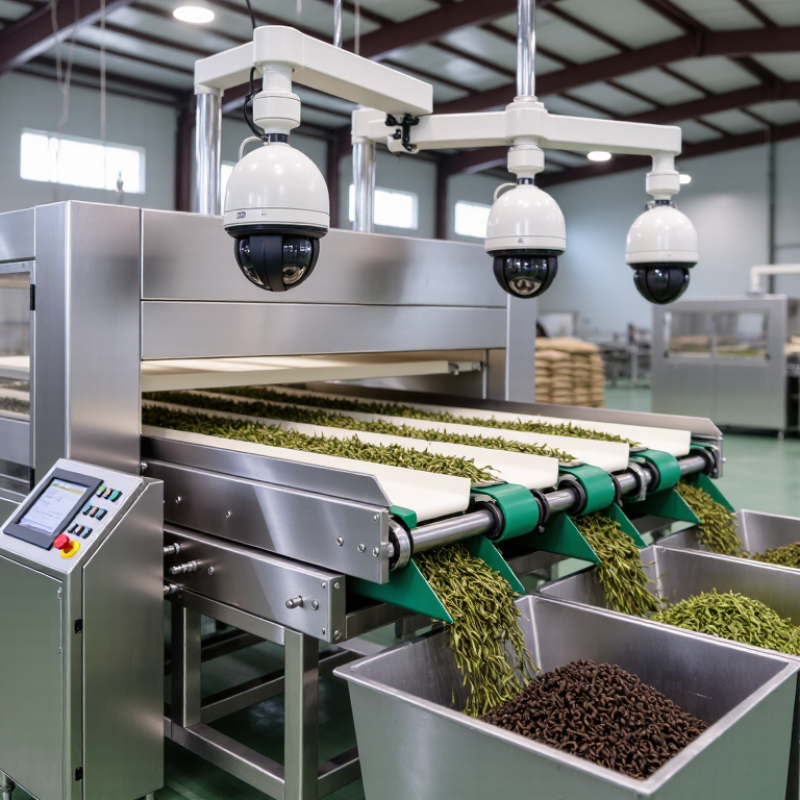
A tea sorting machine separates leaves by visible or spectral differences. It can identify uneven color, stalks, foreign material, or damaged pieces. The process begins with a feeder that spreads tea into a thin, steady layer. This matters. Overlapping leaves can hide defects from the camera, making sorting less accurate.
Core components include a vibrating feeder or belt, a lighting unit, cameras or optical sensors, a processor, and air-jet ejectors. As tea passes the inspection area, controlled light helps sensors capture images of each piece. The processor compares those signals with set sorting criteria. When it detects a target item, a timed air jet pushes it into a separate chute. Clean leaves continue along the main path.
Results depend on setup. Leaf shape, moisture, dust, and lighting can affect detection, so settings often need adjustment for different batches.
Tips
Keep the feed layer even, and clean lenses and chutes regularly. Test a small sample after changing tea type or moisture level. A machine may miss subtle defects; inspect the output and refine settings rather than assuming one calibration fits every batch.
China’s 2022 tea output reached 3.35 million tonnes, according to FAOSTAT. This figure shows the scale of the modern tea supply chain. It also explains why reliable sorting equipment matters to processors and exporters. Large harvest volumes can contain leaves, stems, dust, and uneven particles. Manual inspection alone may struggle with speed and consistency. Quality starts here.
A capable tea sorting machine supplier should understand more than camera specifications. Buyers need practical advice on feed rate, moisture, leaf size, and acceptable defect levels. In a working facility, operators may adjust air pressure while watching rejected material collect beside the main line. Good systems should support stable throughput without damaging delicate leaves. Trial sorting with representative samples remains essential. Laboratory results are useful, but factory conditions can be less predictable.
Global buyers should also examine installation support, operator training, spare parts, and data records. A clear test report can show sorting accuracy, recovery rate, and power consumption. These details make supplier claims easier to verify. Yet no machine removes every judgment from tea production. Color differences may reflect processing variation, not contamination. That distinction requires experienced technicians. Some early assumptions may prove wrong. A China-based supplier with export experience can offer useful manufacturing access. Reliability must be demonstrated through evidence and repeatable results.
China Best Tea Sorting Machine Supplier for Global Buyers
Tea sorting must follow processing style, not only leaf size. FAOSTAT data shows global tea production remains above six million tonnes annually. That scale increases the need for stable, measurable sorting. Chinese tea is commonly divided into six categories: green, black, oolong, white, yellow, and dark tea.
Green tea needs fast removal of stems, yellow leaves, and broken particles. Black tea usually requires grading by size, color, and foreign material after rolling and oxidation. Oolong tea presents a harder task. Its twisted leaves vary in shape and color. White tea needs gentle handling because buds and fine hairs affect value. Yellow tea requires careful separation without excessive vibration. Dark tea often contains compressed, uneven, and fermented pieces. Conventional screens may struggle here.
The International Tea Committee’s statistical reports show strong international tea trade, but quality specifications differ by destination. Sorting systems should therefore combine sieving, air separation, color recognition, and adjustable conveying speed. Food safety controls should also support traceability and hygienic construction. ISO tea standards can guide product classification, but they do not replace trial testing with actual harvest samples.
No sorter is perfect. A machine may remove valuable buds with lightweight waste. This risk is often underestimated. Experienced suppliers should test moisture, particle size, leaf density, and defect levels before recommending equipment. Buyers should request recorded test results, cleaning procedures, and performance data under continuous production conditions. Real leaves behave differently from laboratory samples.
| Tea Category | Typical Processing Form | Common Sorting Stages | Typical Sorting Targets | Suitable Sorting Methods | Key Process Considerations |
|---|---|---|---|---|---|
| Green Tea | Fixed by pan-firing or steaming, then rolled or shaped and dried. Finished tea may be flat, needle-shaped, curly, or granular. | After drying and cooling; screening and air separation are often used before or alongside optical sorting. | Stalks, coarse leaf pieces, foreign material, and unusually yellow, scorched, or discolored pieces. | Vibratory screens for size grading; air separation for light material; color sorting for visible color differences and foreign matter. | Set acceptance criteria for the specific green-tea style. Natural differences in shape and color can occur between cultivars and processing batches. |
| Black Tea | Withered, rolled or cut, oxidized, and dried. Products include whole-leaf, broken-leaf, and fine grades. | After drying; grading by size is commonly followed by cleaning or optical sorting where required. | Stalks, fiber, foreign material, and pieces with atypical color or insufficiently uniform processing. | Multi-deck screens for leaf-size grades; air separation for light fragments; color sorting for distinguishable foreign matter and color defects. | Keep whole-leaf, broken-leaf, and fine grades separate. Sorting criteria should account for the intended grade rather than treating all smaller particles as defects. |
| Oolong Tea | Partially oxidized and usually made as strip-shaped or ball-rolled tea, followed by drying or roasting depending on style. | After drying or roasting; screening and stem removal may precede final visual sorting. | Excessive stalks, foreign material, damaged leaf, and pieces with clear processing-related color defects. | Screens for size and shape grouping; air separation for light debris; optical color sorting for visible defects and foreign matter. | Some oolong styles naturally show varied leaf color and reddish edges. Avoid sorting out characteristic appearance that is normal for the product. |
| White Tea | Withered and dried with comparatively limited processing. Products may contain buds, young leaves, or a mixture, depending on grade. | After drying and gentle handling; screening and hand or optical inspection may be used for final cleaning. | Foreign material, excessive stalks for the specified grade, damaged leaves, and clearly discolored pieces. | Gentle screening for size separation; low-impact air separation for light debris; optical sorting when visible defects need removal. | Handle carefully to limit breakage. Natural white bud hairs and differences between bud and leaf material are not defects. |
| Yellow Tea | Fixed, wrapped or otherwise rested for a yellowing stage, then dried; the exact process varies by product. | After final drying; size grading and selective cleaning are used before packing. | Foreign material, unwanted stalks for the target grade, and pieces with obvious scorching, mold, or abnormal discoloration. | Vibratory screening for size; air separation for light debris; optical color sorting for clearly abnormal pieces and foreign matter. | Yellowing is part of the intended processing character. Set color limits with reference to the tea’s normal finished appearance. |
| Dark Tea (including Pu-erh) | May be pile-fermented or naturally aged; some products remain loose, while others are compressed after processing. | For loose tea, after drying and before blending or compression; compressed products may be inspected after separation or during preparation for packing. | Foreign material, excessive stalks where the grade requires removal, and clearly abnormal or damaged pieces. | Screening and air separation for loose tea; optical sorting for visible foreign matter or distinct defects where product presentation allows. | Fermentation and aging can create natural variation in leaf color. Do not classify normal variation as a defect; avoid damaging leaves intended for compression. |
| Selection note: Tea sorting lines are typically configured around the finished tea’s shape, moisture condition, grade specification, and acceptable loss rate. Screening and air separation handle size and lightweight material; optical color sorting is best used for defects that can be distinguished visually. Actual settings should be confirmed with representative product samples. | |||||
Comparing tea sorting machine suppliers requires more than a headline throughput figure. Ask how capacity changes with leaf size, moisture, and feeding consistency. Request a trial using your own tea samples, then review the rejected leaves as well as the accepted product. Sorting accuracy matters, but so does avoiding unnecessary good-leaf loss. Numbers need context.
Check whether the supplier sells directly, works through regional distributors, or relies on export agents. Each channel can affect installation, spare-parts access, and communication. Ask for written details on commissioning, operator training, warranty coverage, and technical response times. A useful comparison includes practical evidence, such as sample-test records and a clear list of included components. A polished brochure alone is not enough. I have seen buyers focus on speed and overlook service access; that is an easy mistake, though not the only one.
Tips: Compare machines under similar test conditions. Ask for common spare-part lead times, and confirm who handles setup. Keep the test notes—even small differences can matter later.
ISO 3720:2011 sets measurable benchmarks for black tea. It specifies maximum moisture of 8%, total ash of 4–8%, acid-insoluble ash of 1%, and crude fibre of 16.5%. These figures come from a technical standard, not visual grading. A tea sorting machine cannot verify ash or moisture; buyers need suitable laboratory tests.
ISO 1839:1980 provides guidance on tea sampling. A representative sample matters: taking leaves only from the top of a bag can distort results. Buyers can check leaf size, colour consistency, dust, stalks, and visible foreign matter, then compare samples with the agreed grade. Ask for test methods and batch records, not just a polished sample.
Sorting helps control appearance and particle size. It does not prove the tea meets every chemical benchmark. One blind spot is easy to miss: uneven moisture may escape a visual check, yet affect storage quality. Request an independent lab report where specifications require it, and confirm that the sample represents the shipment. Small details matter. Even experienced buyers can overlook them.
The chart presents selected black tea quality benchmarks commonly used in international procurement. Minimum limits apply to water extract and caffeine, while maximum limits apply to moisture, acid-insoluble ash, and crude fibre. Total ash is shown as an acceptable range. Buyers should confirm the applicable contract specification and laboratory test method before acceptance.