

Choosing the best Disposable Soup Container in 2026 means matching the container to the soup, service style, and delivery journey. A thick lentil stew places different demands on packaging than a clear broth. Heat retention, leak resistance, lid fit, and comfortable handling all matter. So does the container’s performance after several minutes in a delivery bag.
Check the details, not just the product photo. Compare capacity, rim shape, material, and whether the lid stays secure when the container is tilted. Ask suppliers for food-contact documentation and test samples with your actual menu. Fill one with hot soup, close it, carry it, and inspect the lid and seams. Small flaws show quickly. One imperfect test is still useful, but it is not enough to prove consistent performance.
For transparency, the following is an original illustrative comment, not a verified quotation from a real industry professional. Fictional packaging specialist Maya Chen offers this practical reminder: “A good soup container is the one that keeps its seal when the ride gets bumpy.” That is a useful starting point, not the whole decision. Compare storage space, stacking stability, customer comfort, and disposal options too. No single design suits every kitchen. This guide explores the trade-offs, questions to ask suppliers, and simple checks that can help you choose with greater confidence. A little skepticism helps. It can prevent an attractive sample from becoming an everyday headache.
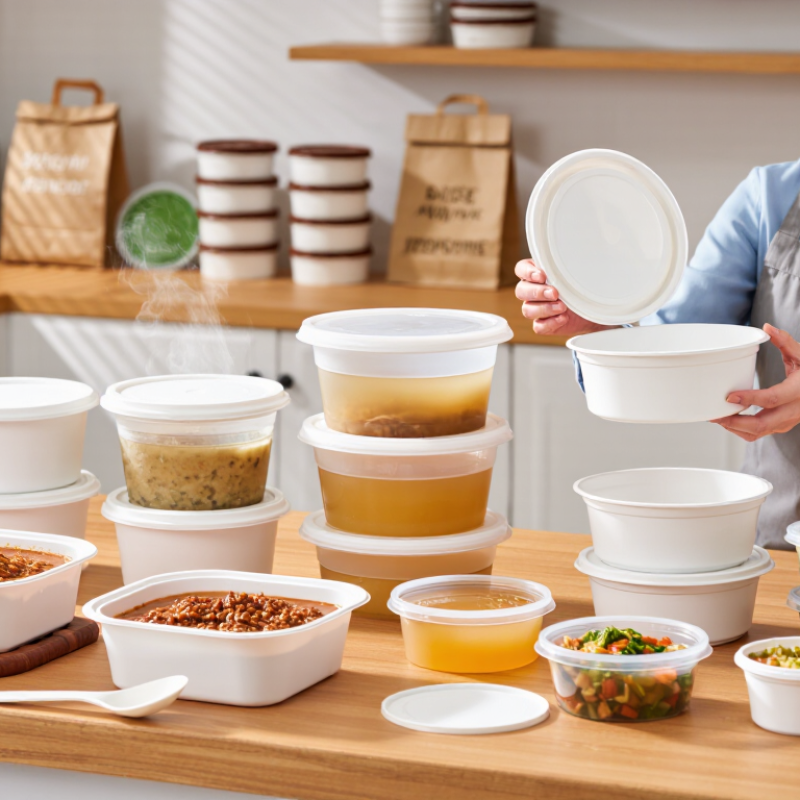
Before choosing a disposable soup container, map out how your soup is served. A busy lunch counter may need containers that staff can fill quickly and stack securely. For delivery, consider the trip: a container that holds a thick stew well may still leak when tipped beside a drink. Note typical portion sizes, soup temperature, toppings, and how long food waits before pickup. A small kitchen test is more useful than guessing from a product description.
Tips: Fill a sample container with hot soup, close it, and gently tilt it over a sink. Check the rim, lid fit, and outside surface after several minutes. Try stacking filled containers, too. Small details matter.
Choose a size that leaves enough headspace for carrying, but not so much that portions look skimpy. Match the material to your service conditions, including heat retention needs, storage space, and disposal options available to customers. If staff use ladles, check that the opening is wide enough to fill without spills. I would not assume one container works for every menu item; noodles, broth, and creamy soups behave differently. Test your busiest service period, when hands are rushed and lids may not be pressed evenly.
Identify Your Soup Service Needs and Use Conditions
Use serving size to narrow down container capacity: smaller formats may suit sides or samples, while larger formats fit fuller portions. Metric values are conversions from US fluid ounces (1 US fl oz ≈ 29.57 mL). These are common nominal size examples; actual product capacities vary, so check specifications and consider headspace for hot soup.
A soup container must handle more than a quick trip from kitchen to customer. Paperboard feels sturdy, but its inner lining and seams determine whether hot broth seeps through. Molded-fiber containers can suit short service, though lids may fit less tightly. Polypropylene resists moisture and heat well, but microwave use depends on the specific container’s label. Material alone is not a safety guarantee.
Check the temperature rating, food-contact statement, and lid fit before ordering. The FDA Food Code (2022, section 3-501.16) sets 135°F (57°C) as the minimum hot-holding temperature for many cooked foods. That is a food-handling benchmark, not a container’s heat-resistance rating. Ask suppliers for test conditions, including fill temperature and contact time. A container that holds soup briefly may soften during longer delivery.
USDA FSIS guidance says perishable food should not remain at room temperature for more than two hours, or one hour above 90°F (32°C). Packaging cannot replace safe holding and delivery practices. For a realistic check, fill a sample with hot soup, close the lid, tilt it gently, and inspect the seams after several minutes. Small leaks matter. I’d also check whether the container warps when stacked; that detail is easy to miss during a desk review.
| Container material | Heat resistance | Microwave suitability | Food safety considerations | Leak and insulation performance | Environmental considerations | Best suited for |
|---|---|---|---|---|---|---|
| Polypropylene (PP) | Generally used for hot foods and offers better heat resistance than many common packaging plastics. The safe operating temperature depends on the container design and manufacturer’s rating. | Often microwave-suitable when specifically labeled for microwave use. Do not assume every PP container, lid, or printed component is microwave-safe. | Choose food-contact-grade containers intended for the relevant foods and temperatures. Follow the supplier’s use instructions; avoid reuse if the container is labeled for single use. | Rigid construction can provide reliable leak resistance when paired with a properly fitted lid. Insulation is moderate. | Recycling availability varies by location. Check local acceptance rules; food residue and local sorting systems can affect recyclability. | Hot takeout soup, reheating when expressly permitted, and everyday food service. |
| Paperboard with a polyethylene (PE) lining | Commonly designed to hold hot liquids, but heat tolerance varies with the paperboard, lining, seams, and lid. | Not automatically microwave-safe. Use in a microwave only when the complete container is explicitly labeled for that use. | The lining is in contact with the food, so confirm that the finished container is suitable for hot, aqueous foods and complies with applicable food-contact requirements. | Suitable lining and sealed seams help contain liquid. Paperboard provides modest insulation; lids may be more prone to heat transfer. | The plastic lining can complicate paper recycling. Local collection and specialized processing options differ. | Single-serve hot soup and takeaway service where a paper-based exterior is preferred. |
| Molded fiber or bagasse | Heat performance depends on the fiber, additives, coatings, and product construction. Confirm that the specific item is rated for hot liquids. | Microwave suitability varies; use only if the manufacturer explicitly approves it. Lids may have different limitations from bowls. | Verify food-contact suitability, especially for hot or fatty foods. “Natural” or “compostable” does not by itself establish food safety or temperature suitability. | Unlined products may absorb liquid or soften during extended contact. Barrier-treated versions can perform differently. | Some products are designed for composting, but acceptance depends on the product certification and the availability of suitable local composting facilities. | Short-service hot foods when the product is specifically rated for soup and local disposal options are appropriate. |
| Expanded polystyrene (EPS) foam | Often provides good insulation for hot servings, but heat exposure limits depend on the product. Keep it away from direct flame and unsuitable high-heat applications. | Do not microwave unless the exact container is clearly labeled for microwave use; many foam containers are not intended for microwave reheating. | Use only food-contact containers supplied for the intended temperature and food type. Local rules may restrict or prohibit some foam food-service items. | Lightweight construction offers strong insulation and can help maintain serving temperature. Lid fit and handling affect spill resistance. | Recycling is limited in many areas, and local restrictions vary. Check municipal guidance before disposal. | Insulated takeaway service where permitted and where microwave reheating is not needed. |
| Polylactic acid (PLA) or other compostable bioplastic | Many PLA products are intended for cold or moderate-temperature applications and can soften with heat. Hot-soup suitability must be confirmed for the specific product. | Generally should not be microwaved unless the manufacturer explicitly states that the exact item is microwave-safe. | Check the product’s food-contact documentation and stated temperature range. Compostability claims do not replace food-safety or heat-resistance information. | Performance varies by formulation and design; do not assume a cold-drink cup or lid is suitable for hot soup. | Composting typically requires the appropriate industrial or other specified facility; these items may not break down in home compost or ordinary recycling streams. | Only hot soup when the product is specifically certified and labeled for hot-liquid use; otherwise, choose a more suitable material. |
| Aluminum | Metal itself tolerates high temperatures, but coatings, seams, and lids may have lower limits. Follow the container supplier’s instructions. | Do not use in a microwave. Metal can cause arcing and damage the appliance. | Confirm that the container is intended for food contact and for the particular food. Acidic or salty foods can interact with aluminum depending on contact time and any protective coating. | Rigid containers can contain liquids when properly formed and sealed. Metal conducts heat quickly, so the outside can become hot to the touch. | Aluminum is recyclable in many systems when accepted and reasonably clean; local collection rules apply. | Hot takeaway meals or oven applications only when the complete container is approved for that use—not microwave reheating. |
Selection note: Heat resistance, microwave suitability, and food-contact compliance are product-specific, not guaranteed by material name alone. Check the container and lid labels, supplier specifications, applicable local food-contact regulations, and local disposal rules before use.
Choose capacity around the portion you actually serve, not the largest size available. A container filled to the rim leaves little room for a lid and can spill during delivery. For broth or chunky soup, allow a little headspace. Too small? It may feel cramped. Check the container’s stated volume and intended use, especially when serving hot food.
Shape affects more than appearance. A wide opening makes thick soup easier to ladle and gives customers room for toppings. A taller, narrower container may stack neatly, but can be harder to fill without splashing. Match the lid to the rim: even a sturdy lid can loosen if its fit is uneven. For leak protection, keep the rim clean, press around the full edge, and test a filled container with cool water before service. Also check the supplier’s guidance for hot-fill or reheating use; not every disposable material handles heat the same way.
Tips: Carry a sample in a delivery bag and watch for shifting or seepage. Choose a lid that closes with a clear, even fit. Small details matter. I would still test a new size during a busy shift; a quiet countertop test can miss real handling problems.
A soup container should keep broth hot without becoming uncomfortable to hold. Compare insulation by checking how long it retains heat and whether the outside stays manageable. A thick paper or molded-fiber wall may help, but performance varies with the soup’s temperature, fill level, and time in transit. Test with a filled container for the delivery time you expect. Be careful with hot liquid.
Microwave use needs a separate check. Choose a container explicitly labeled microwave-safe, and follow its heating limits; “disposable” alone says nothing about microwave suitability. Remove the lid unless its instructions say otherwise, and watch for steam when opening. Some containers soften or warp after repeated heating. That detail is easy to miss.
Disposal depends on the material and local collection rules. Paper containers with grease-resistant linings may not be accepted with ordinary paper recycling, while food residue can affect sorting. Rinse only if local guidance recommends it; water use matters too. Fiber packaging may seem easier to compost, but coatings and facility access can change that answer. I would verify the label and local options before buying in bulk. A small trial helps.
In 2026, choosing a disposable soup container means balancing durability, sustainability, and total cost—not just comparing prices per piece. A sturdy container should hold hot broth without softening, leaking, or becoming difficult to carry. Check its stated temperature range and test it with the soups you actually serve. A thick rim and well-fitting lid can reduce spills during delivery, but they may also add weight and storage space.
Sustainability depends on what happens after use. Paper-based containers may need a lining to resist liquid, while compostable options are useful only where suitable collection services accept them. Check local disposal guidance and product documentation rather than relying on broad labels. I still find this part easy to overlook. A promising material can become a poor choice if customers have no practical way to dispose of it.
Tips: Fill a sample container with hot soup, close the lid, and carry it for several minutes. Check for leaks, soft spots, and uncomfortable heat. Then compare the full cost, including lids, storage, delivery, and likely waste from damaged units. Small test, big difference. The cheapest option may not stay cheapest.