| Paper Grade Comparison |
| Uncoated Textured Cellulose Paper |
80–120 g/m² |
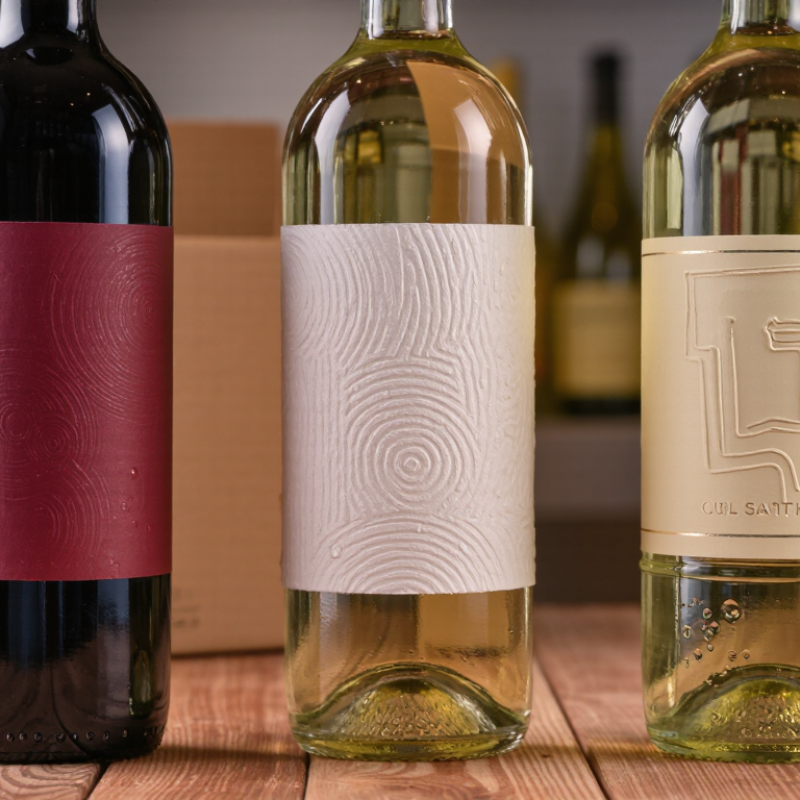
Embossed
Felt-marked
Natural matte
|
Low to moderate resistance. Suitable for dry storage and limited condensation; prolonged immersion can cause swelling or edge lift. |
Permanent water-based acrylic for normal conditions; high-performance acrylic for chilled bottles. |
Offset lithography, flexography, digital toner, and selected inkjet systems. |
Premium tactile appearance, good opacity, strong compatibility with embossing and foil stamping, recyclable paper structure. |
Textured surfaces can reduce fine-detail sharpness. Unprotected ink may scuff or absorb moisture. |
Premium wine labels emphasizing natural texture, craft positioning, and shelf appeal. |
| Coated Gloss or Satin Paper |
80–110 g/m² |
Gloss
Satin
Smooth
|
Moderate resistance when paired with a suitable adhesive and protective varnish; not automatically waterproof. |
Permanent acrylic or emulsion adhesive matched to the bottle's condensation level. |
Offset lithography, flexography, gravure, digital toner, and UV inkjet. |
Sharp images, clean color reproduction, smooth gradients, and efficient high-volume printing. |
Gloss can create glare. Coatings may affect recyclability and can require compatible finishing processes. |
High-volume labels requiring bright images, consistent brand colors, and efficient production. |
| Wet-Strength Label Paper |
90–120 g/m² |
Matte
Satin
Textured
|
High resistance to short-term condensation, refrigeration, and ice-bucket exposure when correctly converted and glued. |
Moisture-resistant permanent acrylic; select a formulation rated for glass and cold, damp conditions. |
Offset lithography, flexography, digital toner, and compatible inkjet systems. |
Better wet strength than standard paper, reduced tearing, and improved label integrity in chilled supply chains. |
Usually costs more than standard paper. Wet strength does not make the label fully waterproof or immune to edge lift. |
Global distribution where bottles may encounter refrigeration, condensation, or short ice-bucket service. |
| Fibre-Content or Recycled Label Paper |
80–120 g/m² |
Natural matte
Speckled
Uncoated
|
Low to moderate unless wet-strength treatment, varnish, or a protective coating is added. |
Permanent acrylic or emulsion adhesive; use a moisture-resistant grade for chilled distribution. |
Offset lithography, flexography, digital toner, and selected inkjet systems. |
Visible recycled or fibre character, lower dependence on virgin fibre, and strong sustainability communication. |
Color and formation can vary between batches. Natural fibers may affect smoothness, opacity, and color consistency. |
Buyers prioritizing recycled content, fibre transparency, and a deliberately natural visual style. |
| Metallic or Pearlescent Paper |
90–130 g/m² |
Metallic
Pearlescent
Reflective
|
Moderate; the paper surface may tolerate condensation, but the adhesive and printed ink system determine final performance. |
Permanent acrylic with good glass adhesion and moisture resistance. |
Offset lithography, flexography, screen printing, digital toner, and foil-compatible processes. |
High visual impact, reflective effects, and strong contrast with opaque white inks or dark colors. |
Metallic surfaces can alter color appearance and make registration or barcode scanning more demanding. |
Luxury, celebration, limited-edition, or premium shelf-impact applications. |
| Finish and Protection Comparison |
| Uncoated Matte Finish |
Depends on base paper |
Low-glare, absorbent, tactile |
Lowest protection unless the base paper is wet-strength treated or receives a protective overprint varnish. |
Use an adhesive selected for the expected humidity and condensation level. |
Offset, flexographic, digital toner, and inkjet with ink matched to absorbency. |
Excellent readability, natural appearance, and good compatibility with handwriting or stamped effects. |
Ink drying and color density can vary. Surface may mark more easily during transport. |
Traditional, natural, or minimalist labels used mainly in dry retail environments. |
| Aqueous or UV Protective Varnish |
Adds minimal coating weight |
Matte, satin, or gloss |
Improves scuff and splash resistance; a varnish alone does not guarantee waterproof performance. |
Permanent adhesive should be tested with the selected varnish and bottle curvature. |
Offset, flexographic, digital, and hybrid print lines depending on varnish compatibility. |
Protects printed graphics while preserving most paper characteristics and allowing different sheen levels. |
Can change color density, surface friction, recyclability, or foil adhesion if poorly specified. |
Buyers needing graphic protection without switching to a fully synthetic label material. |
| Adhesive Comparison |
| Permanent Water-Based Acrylic |
Adhesive coat weight varies by supplier |
Usually compatible with matte, satin, and textured papers |
Generally strong resistance to aging, UV exposure, and humidity; cold application and condensation performance must be verified. |
Primary choice for permanent wine labels; specify glass adhesion and low-temperature performance. |
Compatible with offset, flexographic, digital, and inkjet label production. |
Good long-term stability, low odor, and broad temperature performance after curing. |
Initial tack may be lower than hot-melt systems, especially on cold or damp glass. |
Permanent labels shipped through varied climates and stored for extended periods. |
| Hot-Melt Adhesive |
Adhesive coat weight varies by supplier |
Compatible with many smooth paper facestocks |
Often provides strong initial tack and good performance on chilled bottles; heat resistance varies by formulation. |
Use a wine-label formulation rated for glass, application speed, and expected storage temperature. |
Commonly used in pressure-sensitive label converting and compatible digital or flexographic workflows. |
Fast bonding, strong initial grab, and effective application at high line speeds. |
May soften under elevated heat, show adhesive ooze, or age differently from acrylic systems. |
High-speed application lines and products exposed to cold, damp surfaces during labeling. |
| Removable or Wash-Off Adhesive |
Adhesive coat weight varies by supplier |
Usually paired with smooth, dimensionally stable paper |
Performance depends strongly on water temperature, soak time, and bottle-washing equipment. |
Specify a removable or wash-off grade only when the bottle recovery process is defined and validated. |
Offset, flexographic, digital toner, and inkjet depending on the label construction. |
Supports reusable-glass programs and can reduce label residue during bottle cleaning. |
May lift prematurely in humid storage or fail if the washing process is not compatible. |
Returnable glass systems with controlled collection and industrial bottle washing. |
| Printing Method Comparison |
| Offset Lithography |
Works well with a broad range of paper weights |
Best on smooth or suitably treated surfaces |
Final resistance depends on ink, coating, varnish, and adhesive selection. |
Compatible with permanent acrylic, hot-melt, and selected specialty adhesives. |
Excellent for multi-color process printing, spot colors, and detailed illustrations. |
High image quality, economical for medium-to-large runs, and strong control of fine text. |
Requires plates and setup; less economical for frequent artwork changes or short runs. |
Large or repeat orders with detailed artwork and stable specifications. |
| Flexographic Printing |
Works with standard, textured, and wet-strength label papers |
Suitable for matte, satin, gloss, and some specialty surfaces |
Water, UV, or solvent ink systems can be selected according to the required resistance. |
Compatible with permanent acrylic and hot-melt pressure-sensitive constructions. |
Flexographic printing with water-based, UV, or other supplier-approved ink systems. |
Efficient for long runs, inline coating, fast production, and broad label-web compatibility. |
Very fine photographic detail may require careful plate, anilox, and substrate control. |
High-volume production requiring inline finishing and repeatable output. |
| Digital Toner Printing |
Typically suitable for approximately 70–120 g/m² label stocks |
Best on smooth, dimensionally stable papers approved by the press manufacturer |
Good graphic durability; add a compatible varnish or laminate when heavy abrasion or moisture is expected. |
Compatible with permanent acrylic and hot-melt label constructions after converting validation. |
Electrophotographic digital printing with CMYK and optional specialty colors. |
Excellent for short runs, variable data, multiple languages, and rapid artwork changes. |
Some textured, highly absorbent, or heat-sensitive papers may reduce image quality or feeding reliability. |
Small batches, seasonal releases, customized labels, and multilingual global orders. |
| Digital Inkjet Printing |
Often suitable for approximately 70–150 g/m², subject to printer specifications |
Requires an ink-receptive or printer-approved surface |
Water and abrasion resistance varies substantially by ink chemistry; protective coating may be necessary. |
Compatible with permanent acrylic and selected hot-melt constructions after testing. |
Water-based, pigment, UV, or other inkjet systems depending on the press. |
Strong variable-data capability, high personalization potential, and efficient short-to-medium runs. |
Uncoated absorbent papers may cause feathering, color shift, or slower drying with some ink systems. |
Customized, versioned, or on-demand labels where flexibility is more important than maximum run speed. |