How to Make Tempura Batter?
Tempura Batter looks simple, but small choices shape its crispness. Cold water, a light hand, and hot oil help create a delicate coating around shrimp, sweet potato, or green beans. The goal is not a smooth, stretchy mixture. A few small lumps are useful.
Chef and Japanese-cuisine educator Hiroko Shimbo has written about traditional Japanese cooking. A practical paraphrase of the key batter principle is: “Mix briefly, keep the batter cold, and fry it promptly.” This is a paraphrase, not a verified verbatim quotation. That distinction matters when cooking advice is presented as expert guidance.
This guide explains how to make Tempura Batter with clear proportions, simple tools, and attention to temperature. You will learn why overmixing can make the coating heavy, how to keep ingredients dry, and what to watch for when the batter meets the oil. Listen for a steady sizzle. Look for a pale-gold crust, not a dark shell. The details are tangible: chilled water in a metal bowl, flour measured before cooking, and vegetables blotted with a clean towel.
There is room for judgment. Flour absorbs water differently, and a crowded pan can cool the oil quickly. Recipes cannot remove every variable. Start with a small batch, check the texture, and adjust carefully. Light, lacy results take practice. Sometimes, the first piece is only a test.
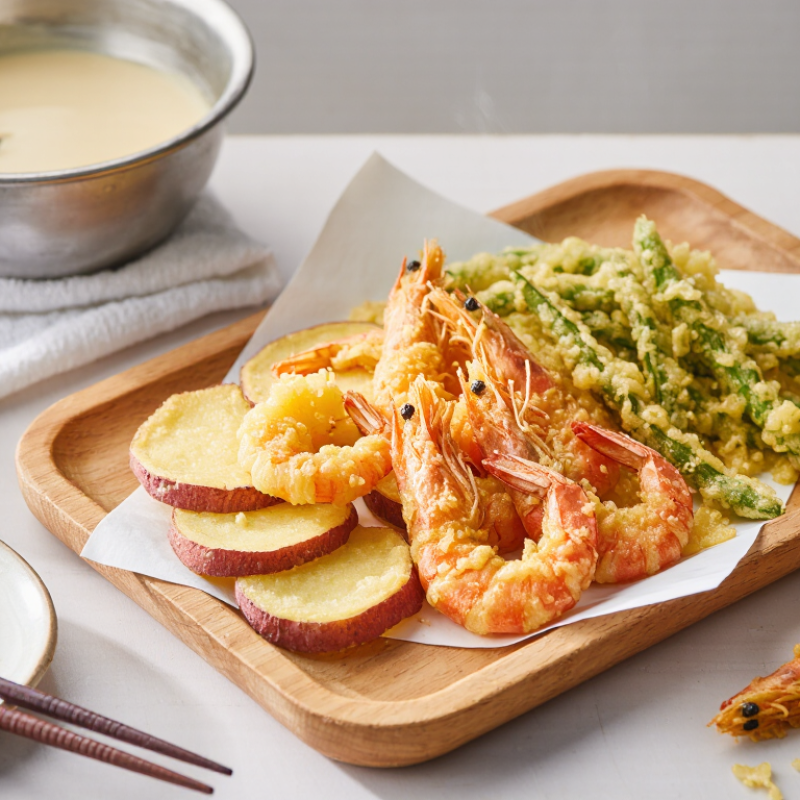
Ingredients and Equipment for Tempura Batter
How to Make Tempura Batter?
Ingredients and Equipment for Tempura Batter
Use plain all-purpose flour, ice-cold water, and one lightly beaten egg. For a lighter, craggy coating, mix only until the flour is barely wet. A few small lumps are fine. The batter may look uneven; that is not always a flaw. Overmixing can develop gluten and make the coating tougher. Keep the flour and water cold, and measure before frying, since hot oil leaves little room for last-minute adjustments.
Set out a chilled metal bowl, chopsticks or a fork, a heavy pot, a slotted skimmer, and a wire rack. A thermometer helps you monitor the oil; avoid guessing by its shine. USDA Food Safety and Inspection Service guidance identifies 40–140°F as the temperature danger zone, so refrigerate perishable ingredients while preparing. The FDA Food Code specifies cold holding at 41°F or below for foods requiring temperature control. These are food-safety benchmarks, not tempura-specific rules. Lower the vegetables or seafood gently, then lift them onto the rack so steam can escape and the crust stays crisp. Paper towels work, but may leave the underside soft. Do a small test piece first.
How to Make Tempura Batter: Ingredients and Equipment
Approximate weights for a small batch: 120 g all-purpose flour, 200 g ice-cold water, and 50 g beaten egg. Whisk briefly and leave some small lumps for a light coating. Use a mixing bowl, whisk or chopsticks, measuring scale, and a thermometer to help keep the frying oil near 175°C (350°F).
Prepare the Ingredients and Keep Them Cold
Tempura batter works best when its ingredients stay cold from the start. Measure the flour before cooking, and chill the mixing bowl if your kitchen is warm. Keep the egg and water in the refrigerator until you are ready to combine them. Ice water helps slow gluten development, which can make the coating heavy. Keep it cold. A small bowl set inside a larger bowl of ice can help, especially when frying several batches.
Whisk one egg with cold water, then add sifted flour and a little cornstarch if you prefer a lighter, crisper coating. Stir briefly with chopsticks or a fork; a few dry pockets and small lumps are fine. That is enough. Overmixing may make the batter elastic, so resist the urge to smooth it completely. Prepare vegetables or seafood first, pat them dry, and keep them chilled until frying. Add batter just before cooking, not long in advance. If it warms while you fry, return the bowl to the ice bath. The coating may still vary with humidity and ingredient temperature, so adjust with a spoonful of cold water only when it seems unusually thick.
Combine the Flour and Starch
Tempura batter begins with a dry, even blend. Weigh the flour and starch before adding liquid; a kitchen scale prevents small measuring errors from changing the texture. As a starting point, combine four parts flour with one part cornstarch by weight. This lightens the flour’s gluten-forming proteins and can help create a delicate crust. USDA FoodData Central lists all-purpose wheat flour at about 10.3 grams of protein per 100 grams. Flour varies, so treat that figure as a guide, not a promise.
Whisk the two powders together in a dry bowl, then sift them once to break up lumps and spread the starch evenly. Look for a uniform, soft-colored mix, with no white pockets of starch. This step matters: a clump can leave a patchy coating on shrimp or sliced squash. The ratio is not sacred. Too much starch may make the crust fragile, and I would adjust it in small increments rather than assume one blend suits every flour.
Tips: Keep the dry mix cool and add icy water only when you are ready to cook. Stir briefly; a few small lumps are fine. Overmixing develops gluten, and that can make the coating heavier than intended.
Add the Cold Liquid and Mix Gently
How to Make Tempura Batter?
Pour very cold water into a lightly beaten egg, then add the mixture to the flour. Keep the bowl cool; I sometimes set it over a larger bowl of ice. The batter should feel cold against your fingers, not merely cool. Work quickly, since warm batter can lose some of its lightness. A few small lumps are fine. Really.
Use chopsticks or a fork and fold the liquid through the flour with a few loose strokes. Don’t whisk until smooth; vigorous mixing develops gluten and can make the coating chewy. Scrape the sides once, then stop, even if the batter looks uneven. I used to keep mixing because the lumps bothered me. That was not an improvement. If dry flour remains in one spot, gently draw it through the liquid without pressing or beating. The finished batter should cling lightly to a piece of vegetable, rather than sit in a thick layer. Keep it cold and use it soon after mixing; resting it for a long time can soften the texture. I still find it tempting to stir again while frying, but leaving it alone usually gives a more delicate crust.
Use the Batter Immediately for Coating and Frying
Tempura batter works best when it goes from bowl to hot oil without waiting. Prepare the vegetables or seafood, drying each piece well, and heat the oil before mixing. Keep the water very cold; a few ice cubes nearby can help. Whisk the egg and water briefly, then add the flour and stir just until combined. Small lumps are fine. I used to chase a perfectly smooth batter, but that usually made the coating heavier. It can look a little rough.
Dip a few pieces at a time and let excess batter drip back into the bowl. Lower them gently into the oil, leaving space so the temperature does not drop sharply. A thermometer helps; many tempura recipes fry around 175–190°C, depending on the ingredients and their size. Watch the first batch closely. Thin vegetables may cook quickly, while thicker pieces need longer. Stir the batter only lightly between batches, and do not add water just because it thickens slightly. If it sits too long, it warms and loses some of its light texture. Make a fresh small batch instead when needed. The timing is fussy, honestly, but crisp edges are worth the small effort.
How to Make Tempura Batter? - Use the Batter Immediately for Coating and Frying
| Step or Ingredient | Amount or Detail | Practical Guidance |
| All-purpose flour | 1 cup (about 120 g) | Spoon the flour into the measuring cup and level it rather than packing it down. |
| Egg | 1 large egg | Crack the egg into a bowl and beat it lightly. For a lighter batter, use only the yolk or omit the egg and add a little more cold water. |
| Ice-cold water | 1 cup (240 ml) | Use very cold water. Cold ingredients help limit gluten development, which can make the coating less tough. |
| Optional starch | Up to 2 tablespoons cornstarch | Replace the same amount of flour with cornstarch for a lighter, crisper coating. This is optional; recipes vary. |
| Prepare the ingredients | Dry vegetables, seafood, or other chosen ingredients | Pat ingredients dry before coating. Excess surface moisture can cause splattering and make the batter cling poorly. |
| Mix the wet ingredients | Combine the lightly beaten egg with the ice-cold water | Stir briefly until combined. Keep the mixture cold while preparing the flour. |
| Add the flour | Add the flour, with optional cornstarch | Stir gently with chopsticks or a fork just until moistened. Small lumps are normal; avoid beating the batter smooth. |
| Use immediately | Coat and fry as soon as the batter is mixed | Do not prepare the batter far in advance or leave it standing. Stirring again and again can develop gluten and produce a heavier coating. |
| Frying temperature | About 170–180°C (340–355°F) | Use a thermometer to check the oil. Fry in small batches so the oil temperature does not drop sharply. |
| Finish and serve | Fry until lightly golden and crisp | Drain on a wire rack or paper towels and serve promptly. Cooking time depends on the size and type of ingredient; ensure seafood and other ingredients are fully cooked. |