

Sourcing Melatonin Gummies in 2026 requires more than comparing prices or choosing attractive packaging. According to Grand View Research, the global melatonin supplements market was valued at approximately USD 1.8 billion in 2023, with strong projected growth through 2030. This expansion creates opportunity, but it also increases supplier risk. Market growth alone does not prove product quality.
A reliable sourcing process begins with documented manufacturing controls. Request current GMP certificates, batch-specific certificates of analysis, melatonin identity testing, potency results, microbial screening, and heavy-metal reports. Ask whether the laboratory is independent and properly accredited. Verify gummy stability under heat and humidity, especially when products may travel in warm containers. A practical check matters: one sample jar should remain consistent after weeks on a warehouse shelf. Supplier audits, traceable raw materials, allergen controls, and transparent labeling should guide every decision. Packaging must also reduce accidental access by children.
Dr. Michael Breus, a clinical psychologist known as “The Sleep Doctor,” has stated, “Melatonin is not a sleeping pill.” That reminder should shape responsible product positioning. Melatonin Gummies should not be marketed with exaggerated promises or unsupported medical claims. The American Academy of Sleep Medicine has also urged caution around supplement use and clearer consumer guidance. In 2026, buyers should review local requirements before selling across borders, because permitted claims, dosage rules, and labeling standards differ. I would not trust a supplier offering only a polished brochure. Real evidence is less glamorous. It appears in test records, audit trails, consistent batches, and honest answers when something needs improvement.
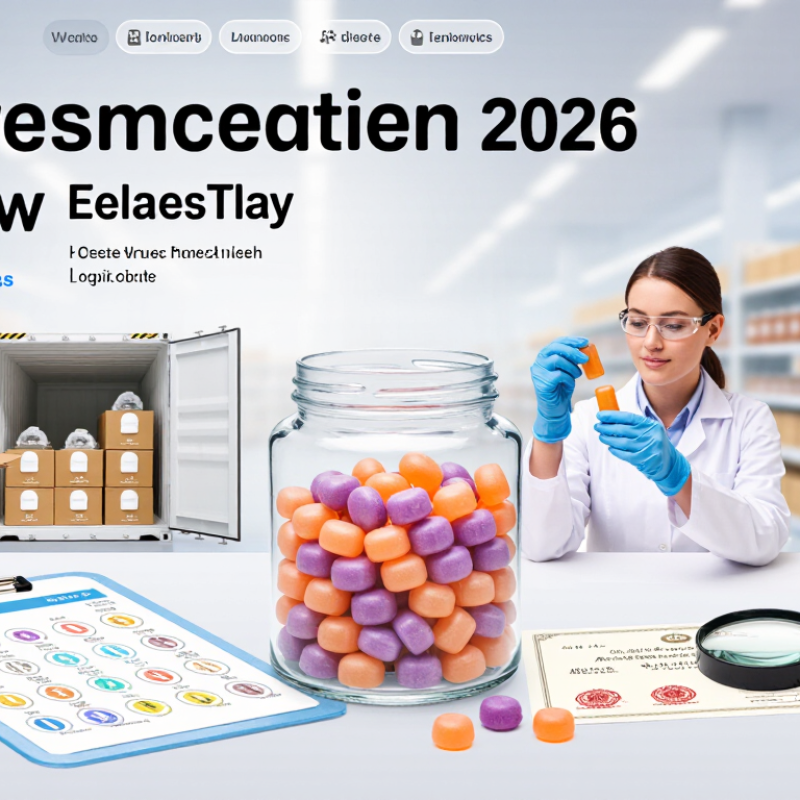
How to Source Melatonin Gummies in 2026?
Define your sourcing requirements before contacting suppliers. Specify melatonin strength per gummy, serving size, flavor, texture, color, and target market. Decide whether you need sugar-free, vegan, allergen-conscious, or gelatin-based formulas. These choices affect cost, stability, and consumer acceptance. Keep the brief measurable. “Good taste” is not enough. Request clear limits for sweetness, firmness, aftertaste, and gummy weight.
Quality requirements should include raw material identity, potency, microbial limits, heavy metals, allergens, and stability data. Ask for batch-specific certificates of analysis from qualified laboratories. Review testing methods, not only test results. Require traceability from ingredient receipt to finished-goods shipment. A supplier should explain its food-safety controls, production records, recall process, and change-notification policy. Factory audits can reveal details that documents miss, such as poor temperature control or inconsistent weighing.
Commercial terms also need definition. Set acceptable minimum order quantities, lead times, sample rules, packaging formats, shelf-life targets, and storage conditions. Check whether labels and marketing claims fit the regulations in each sales market. Requirements can differ sharply across countries. Do not assume one formula works everywhere. A low quotation may hide weak testing or expensive rework. I would leave room for pilot batches, because a laboratory sample may not match full-scale production. Some requirements may change after sensory testing, and that is not a failure. It is useful evidence.
How to Source Melatonin Gummies in 2026?
Qualified sourcing starts with evidence, not attractive samples. Grand View Research estimated the global melatonin supplements market at about USD 1.3 billion in 2023, with strong growth through 2030. That expansion attracts inexperienced suppliers. Request each manufacturer’s current cGMP certificate, audit history, batch records, and product liability coverage. Verify the certification directly with its issuing body. Do not rely on a PDF alone.
Ingredient suppliers need equal scrutiny. Ask for melatonin identity, assay, residual-solvent, heavy-metal, microbial, and allergen results for every lot. A certificate of analysis should show test methods, specifications, laboratory approval, and batch numbers. Prefer independent laboratory confirmation during supplier approval. For gummies, also evaluate dose uniformity, water activity, texture changes, and stability under heat. One overlooked issue is flavor migration during storage. It can affect consumer acceptance.
Tips: Run a pilot batch before signing a large contract. Compare three production lots, not one. Check whether the factory controls formulation changes, supplier substitutions, complaints, and mock recalls. NSF’s dietary supplement certification framework emphasizes ongoing audits and testing, which is a useful benchmark. Still, certification does not replace your own due diligence. I would also review the supplier’s deviation log, even when it feels uncomfortable. Weak records can reveal stronger risks than a poor-looking sample. Use qualified regulatory counsel for the destination market, because supplement requirements differ by country.
Sourcing melatonin gummies in 2026 requires more than comparing prices. Start with the finished product, not only the raw ingredient. Request lot-specific certificates of analysis, identity testing, potency results, microbial limits, heavy metals, pesticides, and allergen controls. Independent laboratory verification matters because a Journal of Clinical Sleep Medicine analysis found that 71% of tested melatonin products did not match their labels. One batch can pass while another fails. That uncomfortable detail deserves attention.
Safety should be checked at the gummy stage. Review the melatonin concentration per serving, serving size, sugar alcohols, allergens, child-resistant packaging, and stability data. The CDC reported an estimated 260,435 pediatric emergency visits linked to melatonin ingestion from 2012 through 2021. Clear warnings and controlled packaging are practical safeguards, not decorative wording. Ask for accelerated and real-time stability studies, since heat can affect texture and dosage consistency. A certificate alone is not proof of quality.
Regulatory review must cover the selling country and every destination market. Confirm permitted dosage, ingredient status, health-claim language, nutrition labeling, import documents, and adverse-event procedures. FDA guidance explains that dietary supplements must meet applicable manufacturing and labeling requirements, while local authorities may impose additional rules. Audit the facility against recognized GMP standards, interview quality personnel, and verify lot traceability through a mock recall. I would not approve a supplier without reviewing failed-batch records. That choice may slow procurement, but overlooking them creates a larger risk.
Sources: CDC, 2022; Journal of Clinical Sleep Medicine, 2017; U.S. FDA dietary supplement guidance.
How to Source Melatonin Gummies in 2026?
Pricing must be compared by finished unit, not only by ingredient cost. Recent supplier quotations commonly range from $0.18 to $0.42 per gummy pack, depending on dosage, flavor, packaging, and testing. Minimum orders often start near 5,000 units and reach 25,000 units for custom formulas. Small orders cost more. They also create more packaging waste.
Production capability matters as much as price. Ask whether the facility uses gelatin or pectin, and whether it can control dosage uniformity across each batch. Request certificates for identity, potency, microbial screening, heavy metals, and stability testing. U.S. facilities should follow current good manufacturing practices under 21 CFR Part 111. A low quote means little without reliable batch records.
The Council for Responsible Nutrition reported in its 2024 Consumer Survey that 75% of U.S. adults use dietary supplements. Grand View Research valued the global dietary supplements market at about $177.5 billion in 2023 and projected continued growth through 2030. Demand is real, but forecasts do not guarantee sales. I would compare at least three written quotations, including lead times, mold fees, retesting costs, and freight. Some suppliers promise 30-day production, yet ingredient delays can extend delivery beyond eight weeks. That risk is easy to underestimate.
| Sourcing Dimension | Entry-Level Production | Mid-Scale Production | Large-Scale Production | Practical Buying Consideration |
|---|---|---|---|---|
| Typical order quantity | 1,000–5,000 bottles | 5,000–25,000 bottles | 25,000+ bottles | Higher volumes generally reduce packaging and conversion costs. |
| Indicative unit price | US$2.40–4.50 per bottle | US$1.50–3.00 per bottle | US$0.95–2.10 per bottle | Indicative bulk pricing for standard formulas; excludes freight, duties, testing, and regulatory services. |
| Common bottle count | 30–60 gummies | 60–120 gummies | 60–180 gummies | Bottle count affects freight cost, shelf presentation, and serving-period claims. |
| Melatonin dosage options | 1–5 mg per gummy | 1–10 mg per gummy | Custom dosage and serving formats | Confirm target-market dosage rules before finalizing the formula and label. |
| Available gummy formats | Standard pectin or gelatin | Pectin, gelatin, sugar-free options | Pectin, gelatin, sugar-free, vegan, organic-positioned options | Pectin is typically preferred for vegan positioning; gelatin may provide a different texture and cost profile. |
| Flavor and color customization | 1–2 standard flavors | Custom flavor and color development | Multiple flavor systems and natural-color options | Custom development may add formulation fees and extend the approval timeline. |
| Private-label packaging | Standard stock bottle and label | Custom label, carton, and bottle color | Fully customized packaging and multi-market formats | Ask whether artwork review, plate charges, molds, and packaging setup are included. |
| Sample development | 7–14 calendar days | 10–21 calendar days | 14–30 calendar days | Timing depends on formula changes, flavor selection, packaging, and testing requirements. |
| Production lead time after approval | 20–35 calendar days | 25–45 calendar days | 30–60 calendar days | Lead time normally excludes international transit, customs clearance, and unexpected laboratory holds. |
| Shelf-life target | 12–18 months | 18–24 months | 18–24 months, subject to stability data | Do not rely on a shelf-life claim without finished-product stability or supporting technical data. |
| Quality certifications commonly requested | GMP documentation | GMP plus recognized food-safety certification | GMP, food-safety certification, audit support, and traceability systems | Verify certificate scope, issuing body, validity period, and whether it covers the actual manufacturing site. |
| Typical testing package | Identity, potency, and microbiological testing | Potency, microbiology, heavy metals, and stability support | Full finished-product testing, batch release, and retained samples | Request batch-specific certificates of analysis rather than generic formula documents. |
| Custom formulation fee | US$150–500 | US$300–1,500 | US$800–3,000+ | Fees may be refundable or creditable against a production order; confirm terms in writing. |
| Payment structure often requested | Deposit plus balance before shipment | Deposit plus balance after inspection or before shipment | Negotiable terms after qualification | Link final payment to agreed quality documents, quantity, and pre-shipment inspection. |
| Best fit for | Market testing and small launches | Growing e-commerce and retail programs | Established brands with predictable demand | Select capacity based on forecast accuracy, cash flow, compliance needs, and inventory risk. |
Pricing note: The price ranges above are indicative 2026 sourcing benchmarks for standard private-label melatonin gummies. Actual quotations vary by country of manufacture, ingredient grade, dosage, formula complexity, packaging specifications, order volume, testing scope, shipping terms, and applicable duties. Regulatory requirements differ by destination market and should be confirmed before purchase.
Sourcing melatonin gummies requires more than comparing prices. Supplier contracts should define ingredient specifications, serving size, acceptable potency variation, and batch documentation. Confirm that the supplier follows suitable manufacturing practices and can provide traceable production records. Contract language should also cover product recalls, delayed shipments, damaged goods, confidentiality, and responsibilities for regulatory changes. A practical agreement protects both sides when assumptions fail.
Testing must be planned before production begins. Request identity, potency, microbiological, heavy metal, allergen, and stability testing from qualified laboratories. Review each certificate of analysis against the finished batch number, not only a sample template. Gummies can lose texture or potency during heat exposure, so transport conditions deserve attention. Independent verification is wise. Supplier paperwork can be incomplete, and I have learned that “tested” does not always mean adequately tested. Local rules may also differ, so consult qualified regulatory professionals before selling in each market.
Tips: Approve a pilot batch before signing large-volume commitments. Keep retain samples from every lot. Use temperature indicators for long-distance shipments. Set clear delivery windows and inspection rights. Recheck labels, claims, and dosage information before distribution. Warehousing teams should record humidity, temperature, expiry dates, and lot movement. A simple digital log can expose gaps early, although it may not replace a formal quality system.