

Frugalpac terms and conditions for the purchase of goods

Top Neutral Silicon Fertilizer Suppliers for Global Buyers

Neutral Silicon Fertilizer is drawing attention from buyers seeking silicon nutrition without unnecessarily shifting soil pH. Yet “neutral” is not a universal technical classification. Product behavior depends on its silicon source, formulation, dose, and application conditions. Buyers should request composition data, solubility results, and independent quality documentation—not rely on a label alone.

The market also needs careful context. FAO’s World Fertilizer Trends and Outlook to 2026 projected global nutrient consumption could reach about 208.3 million tonnes by 2026. That figure covers major fertilizer nutrients, not silicon products specifically. It signals the scale of global input demand, but cannot prove demand for any individual silicon formulation. Silicon researcher Emanuel Epstein wrote, “Silicon is not considered an essential element for most plants, but it is beneficial to many.” His 1999 review in Annual Review of Plant Physiology and Plant Molecular Biology remains a useful scientific reference. A benefit is not a guaranteed yield response.

For global buyers, supplier comparisons should go beyond price per tonne. Check the declared silicon content, batch consistency, dissolution behavior, packaging protection, and technical support for local crops and water conditions. Ask for trial data from comparable soils. Small differences matter. A product that performs well in one field may not transfer neatly to another. This guide examines leading Neutral Silicon Fertilizer suppliers through practical sourcing criteria, while recognizing that public product claims are not a substitute for independent verification.
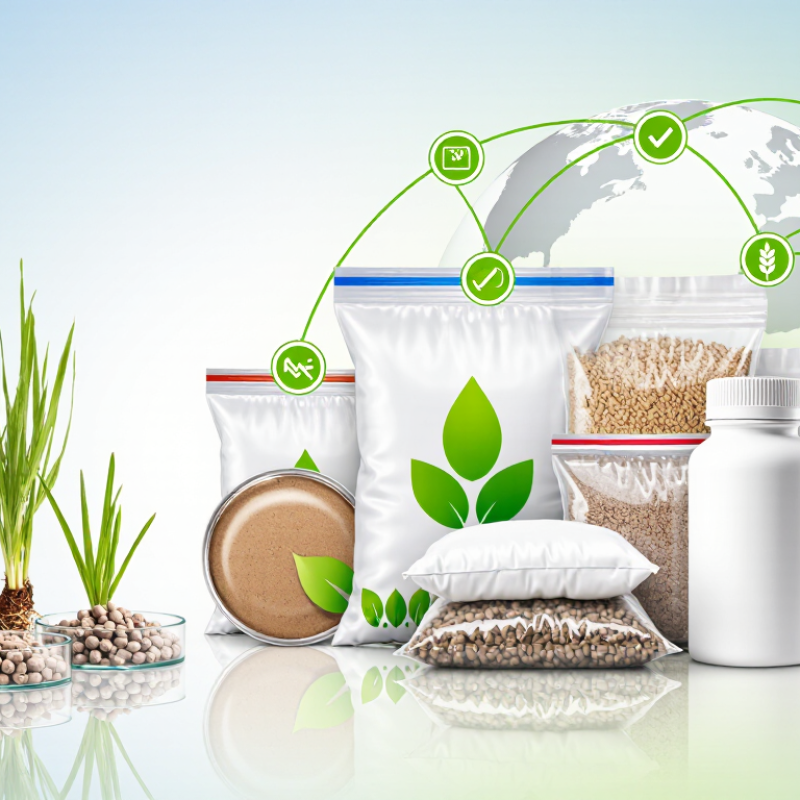
Top Neutral Silicon Fertilizer Suppliers for Global Buyers

What Neutral Silicon Fertilizer Is and How It Works

Neutral silicon fertilizer generally describes a product formulated near a neutral pH, not elemental silicon spread directly on fields. For roots, the useful form is soluble silicic acid, which moves from soil water into plant tissues. Availability depends on the product’s source, water chemistry, and soil conditions. Labels matter.

After uptake, silicon can accumulate along cell walls and beneath plant surfaces, adding physical reinforcement. In some crops, this may support sturdier stems or improve tolerance to particular stresses, such as dry conditions. Effects are not guaranteed. Crop type, application rate, timing, and local growing conditions all influence results; a greenhouse response may not repeat in a field.

Before use, check the guaranteed analysis, solubility, dilution guidance, and compatibility with irrigation water. A small jar test can reveal sediment before it reaches a filter or nozzle. Neutral pH does not mean the product is harmless, universally available, or right for every soil. That distinction is easy to miss.

Neutral Silicon Fertilizer: Understanding pH and Plant Uptake

Neutral pH is 7 at 25°C. This chart places that reference between typical acidic lemon juice and slightly alkaline seawater. Silicon fertilizer formulations vary: check the product label for pH and the form of plant-available silicon.

How it works: Plants take up dissolved silicon mainly as monosilicic acid through their roots. After uptake, silicon can accumulate in plant tissues and support structural strength. A near-neutral product pH describes the formulation; it does not, by itself, determine how much silicon is available to plants.

Key Properties and Agricultural Uses of Neutral Silicon Fertilizers

Neutral silicon fertilizers are formulated near pH 7, helping reduce the risk of sharply changing the acidity of a nutrient solution. Their soluble silicon can be delivered through irrigation or, where the product label permits, foliar spray. Check compatibility first. Calcium-rich water may cause deposits, and “neutral” does not guarantee equal availability across soils. Details matter.

Silicon is especially relevant to rice, sugarcane, and other crops that accumulate it. Ma and Takahashi’s 2002 technical review reports that rice shoots can contain silicon at levels approaching 10% of dry matter. FAOSTAT records rice harvested across roughly 165 million hectares worldwide in 2022, underscoring the scale of a crop where silicon management may matter. Applied silicon can support firmer leaves and stems and help crops cope with some drought, salinity, or disease pressure. Responses vary with soil supply, crop variety, and application timing. Not magic. A field trial and soil assessment are more reliable than assuming every field needs supplementation; even well-designed fertilizer programs can miss local differences.

Criteria for Evaluating Global Neutral Silicon Fertilizer Suppliers

Global buyers should assess neutral silicon fertilizer suppliers by verified composition, not product labels alone. Ask for silicon content, soluble fraction, carrier materials, moisture, and water pH, including the test method and dilution ratio. “Neutral” can describe a product slurry, not its effect in every soil. Small detail. Request recent batch certificates and independent laboratory results for contaminants and particle size. FAO’s World Fertilizer Trends and Outlook to 2026 estimated global nitrogen, phosphate, and potash use at about 202 million tonnes in 2022. That figure excludes silicon fertilizers, but shows why clear product classification matters.

Supplier checks should also cover trial evidence, production consistency, and export handling. Look for replicated field results identifying crop, soil conditions, application rate, and comparison treatment; a photograph of greener leaves proves little. The International Organization for Standardization’s ISO/IEC 17025 framework can help buyers assess whether a testing laboratory is competent, though certification does not validate every product claim. Review batch traceability, moisture-proof packaging, and shipping records, then compare samples against the certificate. One uncomfortable point: supplier documents may look complete while saying little about performance in your soil. Independent testing and a small local trial reduce that gap. Ask how the supplier handles out-of-specification batches, and record the answer in writing.

Leading Supplier Types and Their Product Offerings

Global buyers encounter three main supplier types in the silicon fertilizer market. Mineral processors sell finely milled calcium or magnesium silicate, often in bulk bags for soil application. Specialty formulators offer liquid or soluble products, including potassium silicate and stabilized silicic acid. Regional distributors typically carry smaller packs, application guidance, and products suited to local crops. Useful, but variable.

Product form affects handling and performance. A dry silicate may suit field spreading, while a liquid can fit fertigation systems when its label confirms compatibility. Check the guaranteed silicon content, solubility, pH, and recommended application rate. These details matter more than a broad “high silicon” claim. Some products also supply potassium or calcium, which changes their nutrient contribution.

A reliable supplier should provide a current technical sheet, batch information, and crop-specific trial data where available. Ask how the product behaves in hard water and whether it can mix with common fertilizers. Results depend on soil, crop, and application timing; supplier claims are not a substitute for local testing. There is no perfect format. Even clear specifications can leave practical questions unanswered.

Top Neutral Silicon Fertilizer Suppliers for Global Buyers – Leading Supplier Types and Their Product Offerings
Supplier type Typical product offerings Silicon form and application Neutral-pH suitability Checks for global buyers
Stabilized monosilicic-acid formulators Ready-to-use liquid concentrates and diluted liquid fertilizers, sometimes formulated with stabilizing agents. Provides soluble monosilicic acid, a plant-available form of silicon; commonly marketed for fertigation or foliar use, subject to the product label. Some formulations are designed to be near neutral. pH and stability depend on the complete formulation and must be confirmed for each product. Request a current specification for pH, soluble silicon, storage conditions, shelf life, dilution instructions, and compatibility with the intended nutrient mix.
Liquid silicic-acid fertilizer producers Liquid silicon supplements supplied for soil drench, fertigation, or foliar application, with product-specific concentrations and directions. Silicic-acid-based products can supply soluble silicon. The silicon form and concentration vary by manufacturing process and formulation. Potentially suitable when the finished product is verified near neutral; silicic-acid products are not automatically neutral or equally stable. Check measured pH, analytical method for silicon content, precipitation or gel formation during storage, and label-approved application method.
Colloidal-silica and silica-suspension suppliers Water-based suspensions containing fine silica particles, offered for soil or foliar use where permitted by the product label. Contains particulate silica rather than necessarily providing the same immediately soluble silicon form as monosilicic-acid products. A suspension may be formulated near neutral, but pH alone does not establish silicon solubility or plant availability. Ask for particle and suspension specifications, dispersibility, settling behavior, pH, total versus soluble silicon, and filtration requirements.
Soluble silicate fertilizer manufacturers Potassium-silicate or sodium-silicate liquids and soluble powders; potassium silicate is commonly used as a source of both potassium and silicon. Supplies silicon as soluble silicate species. Product composition and application suitability depend on the salt and concentration. Many soluble silicate products are alkaline, so they should not be assumed to meet a neutral-pH specification without product-specific evidence. Confirm pH and potassium or sodium content; assess compatibility with acidic fertilizers, hard water, and the planned irrigation system.
Mineral silicon soil-amendment suppliers Granular or powdered calcium-silicate and other mineral silicate amendments intended for soil application. Generally supplies silicon through a solid mineral source that releases silicon over time; products may also contribute calcium. Not equivalent to a neutral-pH liquid fertilizer. Some calcium-silicate materials can affect soil pH, depending on composition and application rate. Review neutralizing value, calcium and silicon analysis, particle size, contaminant limits, soil-test recommendations, and local fertilizer registration.
Plant-residue-derived silica product suppliers Silica-rich materials made from processed crop residues, including rice-husk-derived ash or silica, sold as soil amendments or formulated products. Often contains silica in a solid form; solubility and plant availability depend on processing, material properties, and formulation. Neutral pH cannot be inferred from the feedstock. Finished-product pH and plant-available silicon should be verified analytically. Request source and process information, pH, total and extractable silicon, moisture, particle size, and contaminant testing.
Buyer note: “Neutral” should be defined using the buyer’s target pH range and verified on the finished product specification or certificate of analysis. Product pH, silicon solubility, and plant availability are separate properties; confirm all three along with local registration and label requirements.

How Buyers Compare Suppliers and Plan International Procurement

For neutral silicon fertilizer, compare usable silicon content, not just the product’s headline percentage. Ask suppliers to state whether figures refer to elemental silicon or silicon dioxide, and request a recent batch analysis with contaminant limits. Check solubility, recommended application method, and whether the material suits your water quality and equipment. Small differences matter. A fine powder may behave differently from granules during storage and field application. Request packaging details and retain samples for independent testing when order values justify it.

International procurement needs route-level planning. UNCTAD’s Review of Maritime Transport 2024 reported maritime trade growth of 2.4% in 2023 and noted ongoing shipping-route disruptions. The World Bank’s Logistics Performance Index 2023 assessed logistics systems across 139 economies. Use such data as context, then compare actual port options, transit times, insurance, and delivery terms with each supplier. Confirm export documents, production lead times, and how delays or specification deviations are handled in writing. A low quoted price can lose its appeal after extra storage or demurrage costs.

Tips: Ask for matching samples from two or three suppliers and compare them using the same lab method. Check that quoted nutrient content, moisture, and packaging appear on the contract and certificate of analysis. A spreadsheet helps, but it can hide weak assumptions; verify the figures against a trial shipment before planning repeat orders.

Close