China Top 10 Animal Healthcare Syringe Suppliers
Choosing an Animal Healthcare Syringe supplier is not just a price comparison. A syringe must deliver a clear, consistent dose, fit the intended veterinary workflow, and withstand routine handling. Small details matter: legible graduations, a smooth plunger, secure packaging, and dependable supply can all affect daily use. This guide introduces ten suppliers serving China’s animal healthcare market and compares the practical factors buyers should examine.
One important limitation deserves attention. Supplier descriptions and product claims can change, and a ranking alone cannot prove performance. Buyers should verify specifications, quality documentation, intended animal use, and after-sales support directly with each company. Ask about sample evaluation, production consistency, and how the supplier handles defects. A polished catalog is useful, but it is not a substitute for evidence.
To avoid presenting an invented statement as a real quotation, this guide uses a clearly identified fictional composite expert. Veterinary-device specialist Dr. Alex Morgan offers this editorial principle: “A reliable syringe is judged by dose clarity, fit for purpose, and consistent quality—not appearance alone.” This is an illustrative line, not a verified quotation from a real expert. It points to a practical truth: the best supplier depends on the application, purchasing volume, and required documentation. Use the profiles that follow as a starting point, then confirm details before making a decision.
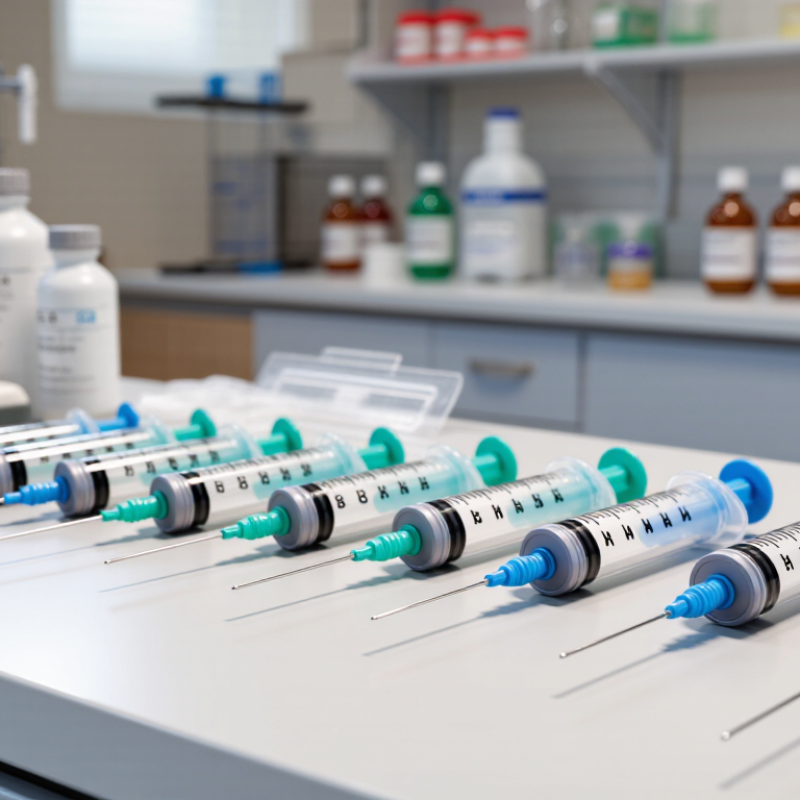
Understanding China’s Animal Healthcare Syringe Market
China Top 10 Animal Healthcare Syringe Suppliers
Understanding China’s Animal Healthcare Syringe Market
China’s animal healthcare syringe market serves livestock farms, veterinary clinics, poultry operations, and companion-animal practices. Demand is not one-size-fits-all. A 1 mL dose needs clear graduations, while herd vaccination may call for a durable barrel and steady handling. Buyers should compare volume, plunger movement, needle compatibility, and packaging—not only unit price. These details can affect dosing consistency in busy treatment rooms and farm settings.
Tips: Request specifications and representative samples. Check graduation readability under ordinary lighting, inspect the barrel for cracks, and test whether the plunger moves evenly. Ask how batches are identified and quality issues are recorded. Small checks matter.
Supplier selection also depends on production consistency and communication. Ask for records matching the exact model and intended use; a general brochure is not enough. Clarify sterilization and packaging details where applicable, along with storage conditions. For export purchases, confirm lead times, sample approval, and product-change notifications in writing. A low quote may reflect differences in materials, inspection, or support. Published specifications cannot always show real-world handling, so verify important claims directly before placing a large order.
China Animal Healthcare Syringe Market: Livestock Demand Context
Explanation: Livestock populations provide context for potential veterinary injection demand, including vaccination and treatment. They are not syringe sales or a supplier market-share measure.
Source: China National Bureau of Statistics, 2023 Statistical Communiqué. Year-end inventory, million head.
How Veterinary Syringes Are Designed and Manufactured
Veterinary syringes begin with a practical question: what dose must a caregiver deliver, and how precisely? Designers consider animal size, medicine thickness, grip, and the clinic’s working conditions. A small poultry dose needs clear graduations. A larger livestock syringe may need a sturdier barrel and a comfortable grip. Small details matter.
Manufacturing usually starts with molded components, including the barrel, plunger, and sometimes a needle hub. Materials are selected for strength, visibility, and compatibility with intended medicines. Graduated markings are printed or molded onto the barrel, then checked for legibility and position. Assembly takes place under controlled conditions appropriate to the product. Some syringes are designed for one-time use; others are made for repeated use and require different cleaning considerations. There is no single design for every animal or treatment.
Quality checks can include plunger movement, leakage, dose measurement, and visual inspection. For sterile products, sterilization and packaging processes also need validation. A smooth plunger is useful, but it does not prove accurate dosing. The markings must be tested too. No drawing captures every clinic habit, and real handling can reveal awkward grips or hard-to-read scales. That feedback should shape later designs.
Criteria for Evaluating Chinese Syringe Suppliers
When comparing Chinese suppliers of animal healthcare syringes, evaluate the production process, not just the quoted price. Ask how barrel volume, plunger movement, and graduations are checked across batches. A clear tolerance range matters. Request recent inspection records and a sample lot, then examine the markings under ordinary clinic lighting. Small errors matter.
Review material specifications, sterilization controls where applicable, packaging integrity, and lot traceability. Ask whether the supplier can provide batch records and explain how nonconforming units are isolated. Check needle-hub fit and leakage using the intended formulation and handling conditions. A smooth plunger alone is not proof of reliable performance. Samples can be unusually well finished, so inspect carefully.
Assess communication and delivery discipline. Confirm production capacity, lead-time assumptions, change-control practices, and response times for technical questions. Independent audits or quality-system documents can strengthen confidence, but verify their scope and dates. A video tour is useful, not conclusive. Keep a simple scorecard and revisit it after pilot orders. No supplier is perfect. A low-risk sample may hide variation at scale, so inspect more than one batch before committing.
Profiles of 10 Animal Healthcare Syringe Suppliers in China
China’s animal healthcare syringe market includes suppliers with different production strengths. One focuses on high-volume disposable syringes for routine veterinary clinics. Another offers several barrel sizes, useful when treating animals of different weights. A third emphasizes clear graduations that remain readable under bright examination lights. Small details matter.
A fourth supplier may specialize in needle-and-syringe combinations for farm settings. A fifth can provide packaging options suited to organized clinic storage. A sixth may offer custom capacity ranges, while a seventh concentrates on consistent plunger movement. An eighth supplier might serve distributors seeking mixed product specifications. A ninth may have experience with export documentation and traceable production records. The tenth could focus on quality checks, including visual inspection for defects and checks on packaging seals.
These are capability-based profiles, not verified endorsements of specific companies. Buyers should request current product specifications, material details, sample units, and quality documentation before comparing suppliers. Ask how dimensions and batch records are checked. A polished catalogue is not enough. Real-world handling can reveal issues that a brochure misses, and some product details may need closer review.
Comparing Supplier Capabilities, Products, and Certifications
China Top 10 Animal Healthcare Syringe Suppliers: Comparing Supplier Capabilities, Products, and Certifications
Comparing China’s leading animal healthcare syringe suppliers requires more than checking catalogue size. The OECD-FAO Agricultural Outlook 2023–2032 projects global meat production to grow by 12% over the decade. That growth puts practical demands on veterinary dosing equipment: clear graduations, secure plunger movement, and needle connections that remain stable during routine use. Buyers should compare disposable and reusable models, available capacities, material specifications, and packaging options against their actual treatment workflows. Small details matter.
Certification claims need careful checking. Ask whether an ISO 13485 certificate covers the manufacturing site and product scope being quoted, and confirm its validity with the issuing body. Also review sterilization evidence, batch traceability, and quality-control records for the specific syringe type. A certificate alone is not proof of consistent performance. Request samples and inspect graduation readability, leakage, and plunger smoothness under realistic handling conditions. Not glamorous, but useful.
For a fair comparison, request the same documents and sample tests from each supplier. Check production capacity, lead times, customization limits, and how the supplier handles nonconforming batches. The FAO’s livestock statistics show why animal production needs vary across regions; a syringe suitable for one setting may not suit another. One weakness in many comparisons is relying on polished brochures. Real evaluation takes time, and not every buyer has enough of it.