

Frugalpac terms and conditions for the purchase of goods

Top 10 Flat Bottom Pouch Manufacturers Worldwide?

Choosing a reliable pouch manufacturer requires more than comparing logos, prices, or attractive product photos. This guide explores the Top 10 Flat Bottom Pouch Manufacturers Worldwide through practical and verifiable criteria. These include production capacity, material options, printing quality, sealing performance, certifications, minimum order quantities, and delivery consistency. A pouch may look impressive on a screen. Its real value appears during filling, transport, shelf display, and repeated handling.

The evaluation also considers factory expertise in coffee bags, pet food packaging, snacks, powders, and other dry goods. Details matter, such as gusset accuracy, zipper alignment, valve installation, oxygen barriers, and seal strength. Public company information, manufacturing evidence, customer feedback, and available compliance documentation help support each selection. However, no ranking is permanently perfect. Supplier capabilities can change, and published information may not reveal every operational weakness. A manufacturer with excellent printing may offer limited customization. Another may provide strong technical support but require higher order volumes. Buyers should request current samples, test reports, production timelines, and written specifications before placing an order. Small checks prevent expensive surprises. This overview offers a practical starting point, not a substitute for direct supplier verification.
Top 10 Flat Bottom Pouch Manufacturers Worldwide?

Flat Bottom Pouches: Definition, Structure, and Key Applications

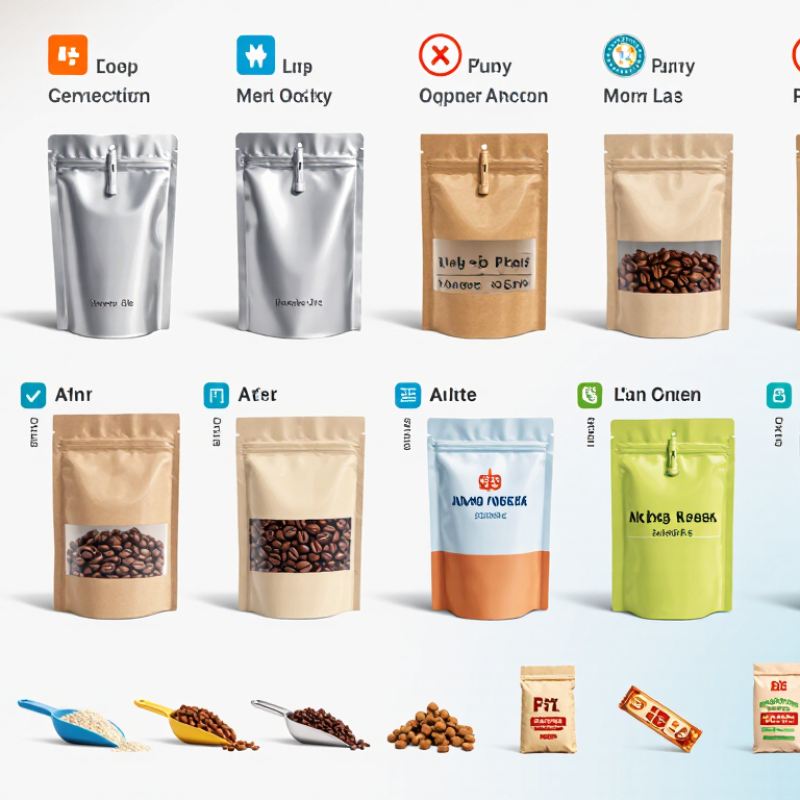
Flat Bottom Pouches are flexible bags with a squared base, gusseted sides, and a wide opening. They stand upright on shelves and remain stable during filling, transport, and use. Their structure usually combines several layers: an outer printable film, a barrier layer, and a heat-sealable inner film. Depending on the product, converters may add aluminum, metallized film, or high-barrier polymers. Zippers, tear notches, handles, and degassing valves are common functional features.

The format suits coffee, dry pet food, snacks, grains, powders, and household products. Its broad front panel creates strong communication space and improves shelf visibility. According to Smithers’ The Future of Global Flexible Packaging to 2028, flexible packaging demand continues to expand across food and consumer applications, supported by convenience and material efficiency. Grand View Research also reports steady growth in the global flexible packaging market, with food remaining a major end-use sector. These figures support the pouch’s commercial relevance, but they do not guarantee performance for every product.

Manufacturers should test seal strength, drop resistance, oxygen transmission, moisture transmission, and filling-line compatibility. A pouch that looks stable may still fail at its corners. The flat base can improve presentation, yet it may require extra material compared with simpler formats. That trade-off deserves honest evaluation. Recyclability also depends on the final structure, local collection systems, and available recycling technology. When comparing the top ten manufacturers worldwide, buyers should examine testing records, production consistency, certification, and practical experience—not only attractive samples.

Top 10 Flat Bottom Pouch Manufacturers Worldwide? - Flat Bottom Pouches: Definition, Structure, and Key Applications

Brand-neutral technical reference covering the main structural elements, material options, performance requirements, and applications commonly associated with flat bottom pouches.
No. Pouch Component or Criterion Typical Materials or Specification Primary Function Common Applications Key Selection Consideration
1 Flat Bottom Structure Four-corner format with a stable rectangular base Allows the pouch to stand upright and provides a broad printable surface Coffee, pet food, snacks, grains, powders, and household products Base stability, filling speed, shelf presentation, and storage efficiency
2 Outer Print Layer PET, BOPP, paper, or other printable web materials Provides graphics, product information, color consistency, and abrasion resistance Retail packaging requiring high-impact branding and product identification Print quality, scuff resistance, recyclability, and compatibility with lamination
3 Barrier Layer Aluminum foil, metallized film, EVOH, or high-barrier coated film Reduces transmission of oxygen, moisture, light, and aroma Roasted coffee, oxygen-sensitive foods, powders, and aroma-sensitive products Required oxygen transmission rate, moisture vapor transmission rate, and light protection
4 Heat-Sealant Layer PE, CPP, or other heat-sealable polymer Creates the hermetic seals at the top, sides, and bottom of the pouch Dry foods, frozen products, pet food, detergents, and agricultural products Seal strength, hot-tack performance, sealing temperature, and contamination tolerance
5 Bottom Gusset Reinforced folded base formed from the pouch web Supports upright display and distributes product weight across the base Large-volume and heavy products such as pet food, rice, flour, and beans Load-bearing capacity, crease control, leakage resistance, and base dimensions
6 Resealable Closure Press-to-close zipper, slider zipper, or hook-to-hook closure Allows repeated opening and closing after the initial seal is broken Snacks, cereal, pet treats, coffee, dried fruit, and powdered products Closure reliability, consumer usability, dust resistance, and compatibility with filling equipment
7 Degassing Valve One-way valve integrated into a multilayer pouch Releases carbon dioxide while limiting external air entry Freshly roasted coffee and selected gas-releasing food products Valve opening pressure, aroma retention, seal integrity, and placement accuracy
8 Tear Notch or Easy-Open Feature Laser-scored or mechanically notched opening area Provides controlled opening without scissors or additional tools Snacks, powdered foods, sauces, supplements, and household products Opening force, tear direction, product protection, and avoidance of accidental leakage
9 Product Protection and Compliance Food-contact suitable films, inks, adhesives, and sealants where required Protects contents from contamination and supports applicable packaging regulations Food, animal nutrition, personal care, pharmaceutical, and chemical products Food-contact declarations, migration limits, traceability, and quality-control testing
10 Format and Sustainability Options Custom dimensions, mono-material PE or PP, recyclable structures, and PCR options where suitable Balances filling efficiency, shelf life, logistics, and end-of-life considerations Retail, e-commerce, foodservice, bulk goods, and private-label packaging Product protection requirements, local recycling infrastructure, downgauging, and life-cycle goals

How to Evaluate Flat Bottom Pouch Manufacturers

Choosing among the top 10 flat bottom pouch manufacturers requires more than comparing catalog photos. A capable supplier should explain film structure, sealing temperature, zipper performance, and filling-line compatibility. The Flexible Packaging Association has placed recent U.S. flexible packaging sales near 39 billion dollars annually, showing the sector’s scale and competitive pressure. However, market size does not prove manufacturing consistency.

Request production samples from at least three batches. Check pouch dimensions, gusset symmetry, seal width, drop resistance, and opening force. Ask for oxygen and moisture barrier results from recognized laboratory methods. Also verify ISO 9001 systems, food-contact documentation, traceability, and corrective-action records. Good evidence matters more than polished presentations.

Do not judge sustainability from recycled content alone. Smithers’ flexible packaging forecasts identify material reduction and recyclable structures as major development priorities, but performance trade-offs remain real. A thinner pouch may save material yet lose stiffness or sealing reliability. Test it on your actual packing line. A beautiful sample can still fail.

Review minimum order quantities, lead times, cylinder or plate charges, and response times during complaints. Require written specifications and retained samples. Audits should include raw-material storage, printing registration, lamination curing, and final inspection. One weakness is easy to miss: suppliers may show excellent pilot runs but inconsistent mass production. Independent testing helps expose that gap.

How to Evaluate Flat Bottom Pouch Manufacturers

Recommended buyer-side weighting for comparing manufacturers without relying on brand names or company rankings. Compliance, barrier performance, sealing quality, and dimensional consistency receive the highest priority because they directly affect product safety, shelf life, and packaging reliability.

Global Market Regions and Leading Production Capabilities

The top 10 flat bottom pouch manufacturers are increasingly shaped by regional capability, not factory size alone. Asia remains the main production center, supported by integrated film extrusion, high-speed printing, and automated pouch forming. China and India offer broad capacity and competitive conversion costs. Japan and South Korea often emphasize barrier films, precise sealing, and cleaner production controls.

Europe contributes advanced engineering from Germany, Italy, and Türkiye. These facilities commonly support recyclable structures, short production runs, and strict quality documentation. North America remains important for rapid delivery and customized packaging, especially through plants in the United States and Mexico. Brazil also serves regional demand with growing flexible packaging capacity. Smithers projects continued expansion in global flexible packaging through 2029, while Mordor Intelligence estimates market growth of roughly 4% annually during the forecast period. The figures vary.

That matters.

Flat bottom pouch production depends on more than output volume. A reliable supplier should demonstrate seal-strength testing, oxygen and moisture barrier data, color consistency, and traceable raw-material controls. The Flexible Packaging Association reports that flexible packaging remains a major packaging format in the United States, reflecting its lightweight and material-efficient design. However, sustainability claims deserve careful review. Some recyclable structures still require specific collection systems and suitable local infrastructure. This is often overlooked. Production capability must therefore be judged by region, certification, equipment stability, and real delivery performance—not by catalog promises alone.

Top 10 Flat Bottom Pouch Manufacturers Worldwide

Top 10 Flat Bottom Pouch Manufacturers Worldwide

The top 10 flat bottom pouch manufacturers worldwide should be judged by measurable capability, not advertising claims. Buyers should examine annual production capacity, seal consistency, barrier performance, and export experience. Flat bottom pouches need accurate gusset forming. Small alignment errors can create unstable shelves or uneven filling.

Industry data shows why this segment matters. The Flexible Packaging Association reported United States flexible packaging sales of approximately 40 billion dollars in 2023. Smithers also estimated the global flexible packaging market at more than 300 billion dollars in 2023. These figures include several pouch formats, not only flat bottom designs. Still, they reveal strong demand for lightweight packaging and efficient material use.

A reliable top-ten selection should compare manufacturers across food, coffee, pet nutrition, and household applications. Important evidence includes ISO-certified quality systems, migration testing, print registration, recyclable structure options, and documented lead times. Manufacturers with regional plants may reduce shipping distance and improve service reliability. However, sustainability claims require careful checking. Recyclability can depend on local collection systems and pouch construction.

Production trials are essential. Ask for samples filled with the intended product. Check the base after transport simulation, repeated opening, and warehouse stacking. No ranking is perfect. Public capacity figures may be outdated, while smaller specialists can offer better technical support. Cost remains important, but the cheapest quotation may hide tooling, testing, or minimum-order expenses.

Industry Trends, Sustainability, and Future Developments

Flat-bottom pouch manufacturers are adapting quickly as packaging buyers demand stronger sustainability evidence. The format offers a stable base, efficient shelf use, and good printing space. These advantages support food, pet care, and household product applications worldwide. However, performance still depends on film structure, filling speed, and seal quality.

Sustainability now influences supplier selection. Many manufacturers are developing recyclable mono-material pouches, downgauged films, and options with verified recycled content. Compostable structures remain useful in selected conditions, but they are not suitable for every product or waste system. A thinner pouch may reduce material use, yet it can create puncture risks during transport. Factory trials matter. Buyers should request barrier data, migration testing, recycling guidance, and clear lifecycle assumptions instead of accepting broad environmental claims.

Future developments will combine automation with more precise quality control. Inline cameras can detect weak seals, wrinkles, and printing defects before shipment. Digital production may also support shorter runs and regional customization, reducing excess inventory. Some manufacturers are testing scannable features for batch information and consumer recycling instructions. These tools sound promising, but they add cost and may increase electronic waste if poorly managed. Energy monitoring, renewable power, and responsible water use will become stronger indicators of operational maturity. The industry still needs better global standards, because sustainability comparisons are often inconsistent.

Close