

Global buyers are paying closer attention to Bru Coffee Sachets as demand grows for fast, consistent, and portion-controlled coffee. The International Coffee Organization estimated global coffee production at about 178 million 60-kilogram bags in 2023/24. Its reports also show continued pressure from climate risks, logistics costs, and changing consumption patterns. These conditions make supplier selection more important than attractive packaging alone.
The right supplier should demonstrate stable bean sourcing, clear roast specifications, reliable sachet sealing, and practical export experience. Ask for batch records, sensory samples, shelf-life evidence, and packaging details before signing a large order. Small details matter. A torn sachet can damage an entire retail shipment.
Coffee educator James Hoffmann offers a useful reminder: “Coffee is a fruit.” That simple observation supports a serious purchasing point. Freshness, origin, processing, and roasting still influence the cup, even inside a convenient sachet. Suppliers that explain these variables clearly deserve closer attention. Suppliers that only promise “premium quality” deserve more questions.
Market research from Grand View Research and Mordor Intelligence indicates continued expansion in instant and single-serve coffee categories. However, market forecasts are not guarantees. Some reports group instant powder, pods, and sachets together, which can blur the real opportunity for buyers. This guide compares leading Bru Coffee Sachets suppliers through product consistency, certifications, customization, minimum order quantities, and delivery capability. The assessment is practical, but not flawless. Buyer requirements differ by country, channel, and customer taste. A supplier suitable for hotel rooms may fail in supermarkets.
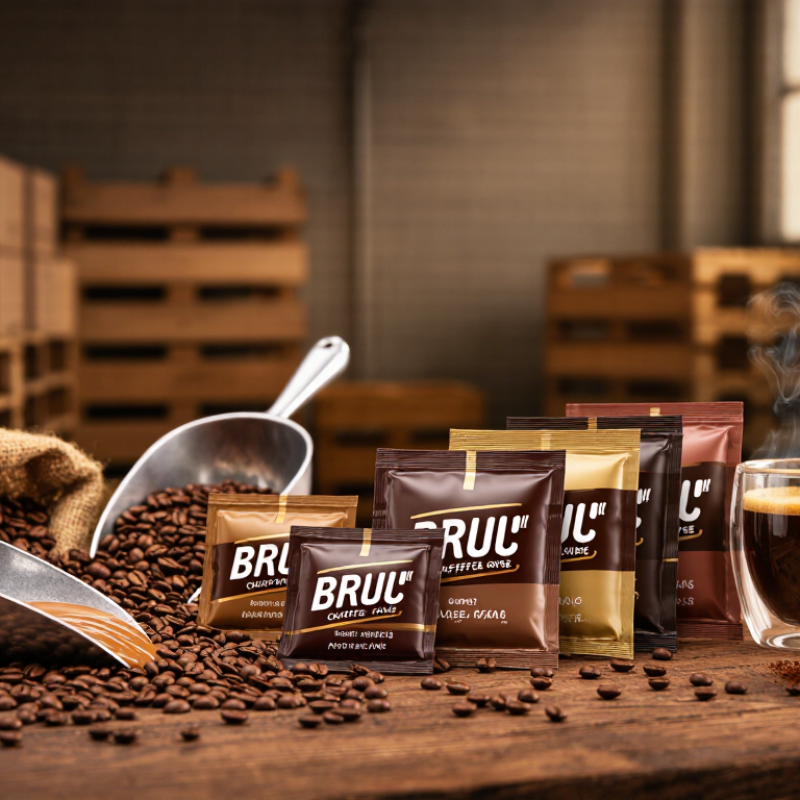
Single-serve coffee sachets offer a practical format for offices, hotels, travel retailers, and international distributors. Each sachet usually contains measured soluble coffee, reducing preparation errors and inventory handling. The compact packet protects the powder from moisture, light, and air when sealed correctly. A clean tear notch also matters during busy service.
Buyers should examine coffee origin, roast profile, soluble yield, and recommended water volume. A balanced product dissolves quickly without leaving heavy sediment or a burnt aftertaste. Packaging should show batch codes, net weight, storage guidance, and a realistic shelf-life period. Suppliers should provide certificates of analysis, allergen statements, food-safety records, and traceability documents. These details support dependable purchasing across different markets.
Small details affect user experience. A sachet that tears unevenly can scatter powder across a desk. Thin outer film may also crease during shipping. Carton strength deserves testing. From practical sampling, flavor can taste flatter than freshly brewed coffee, especially after long storage. That limitation should be stated honestly. Some sachets also create more packaging waste than bulk formats. Buyers may need to compare recyclable materials, transport efficiency, and disposal rules in each destination. Sample testing under warm and humid conditions can reveal weaknesses that a product sheet may hide. Suppliers with consistent documentation, responsive communication, and stable batch quality are usually safer choices for long-term sourcing.
| Product Format | Typical Net Weight per Sachet | Main Ingredients | Recommended Preparation | Typical Packaging Structure | Typical Shelf Life | Key Buyer Considerations |
|---|---|---|---|---|---|---|
| Plain Soluble Coffee | 1.5–3 g | Soluble coffee, sometimes with permitted anti-caking agents | Add approximately 150–200 ml of hot water and stir | Heat-sealed multilayer laminate sachet with a high-barrier inner layer | Usually 18–24 months when unopened and properly stored | Confirm coffee strength, roast profile, solubility, aroma retention, and nitrogen-flushing capability |
| 3-in-1 Coffee Mix | 15–25 g | Soluble coffee, sugar, and non-dairy creamer or milk-based creamer | Add approximately 150–180 ml of hot water and stir thoroughly | Moisture- and oxygen-barrier laminate, commonly formed into stick packs or flat sachets | Usually 12–24 months, depending on formulation and packaging | Check sugar level, creaminess, allergen declaration, ingredient compliance, and powder flow |
| 2-in-1 Coffee Mix | 10–18 g | Soluble coffee and creamer; sugar may be absent or supplied separately | Add approximately 150–180 ml of hot water | High-barrier laminate sachet or stick pack with heat-sealed edges | Usually 12–24 months under recommended storage conditions | Review sweetness, dairy or non-dairy formulation, whitening performance, and dissolving speed |
| Flavoured Instant Coffee | 1.5–25 g, depending on format | Soluble coffee with flavouring; may also contain sugar and creamer | Add hot water according to the formulation and serving size | Printed multilayer laminate designed to protect volatile flavour compounds | Commonly 12–24 months | Request flavour stability tests, declaration of added flavours, and sample approval before production |
| Single-Origin or Premium Soluble Coffee | 1.5–3 g | Soluble coffee made from specified coffee origins or processing profiles | Add approximately 150–200 ml of hot water | High-barrier individual sachet, often with premium printed graphics | Usually 18–24 months | Verify origin documentation, cup profile, roast level, batch traceability, and sensory consistency |
| Decaffeinated Instant Coffee | 1.5–3 g | Soluble coffee processed to reduce caffeine content | Add approximately 150–200 ml of hot water | Light- and moisture-resistant laminate sachet | Usually 18–24 months | Check the legally permitted caffeine claim, decaffeination method, laboratory testing, and local labeling rules |
| Bulk Sachet Multipack | Usually 10–100 individual sachets per carton | Depends on the selected coffee format | Individual sachets prepared according to the product instructions | Individual sachets packed into folding cartons, bags, or shipping cases | Governed by the shortest shelf life of the packaged components | Confirm case count, carton dimensions, pallet configuration, barcode requirements, and export markings |
When evaluating coffee sachet suppliers, start with evidence, not attractive samples. The International Coffee Organization reported global coffee consumption of about 177 million 60-kilogram bags in 2022/23. That scale makes supply reliability essential. Ask for monthly production capacity, lead times, and backup facilities. A supplier should provide recent certificates for food safety systems, allergen control, and packaging migration testing. Check whether documents match the actual factory address. Small details matter.
Request samples from at least three production batches. Inspect sachet seals after transport, not only at room temperature. Test aroma, solubility, fill weight, and moisture resistance. ISO 22000 certification can indicate a structured food-safety system, but certification alone proves little about daily discipline. Review audit dates and nonconformity records where available. The Global Coffee Platform also emphasizes traceability and responsible sourcing across coffee supply chains. Ask for origin records and lot-level documentation. Be cautious with unusually low prices. They may reflect weaker film, unstable supply, or incomplete testing. That assumption can fail.
For global buyers, compare total landed cost rather than unit price. Include freight, duties, sampling, rework, and rejected cartons. Clarify sachet dimensions, carton strength, pallet patterns, and private-label flexibility. Confirm whether the supplier can adapt sweetness, roast profile, and local language requirements legally. Response speed is useful evidence, but it is not proof of capability. I would score suppliers against identical criteria and keep written records. Even experienced buyers miss hidden risks. A second factory visit may be worth more than another sales presentation.
For global buyers, supplier evaluation should prioritize food safety, production reliability, export readiness, and commercial flexibility. The weighted criteria below use a 100-point procurement framework for comparing coffee sachet suppliers without displaying individual company or brand data.
Major supplier regions for single-serve coffee sachets include India, Vietnam, Indonesia, China, and parts of Europe. Each region offers different strengths. India often provides strong coffee-processing expertise and flexible packaging options. Vietnam and Indonesia are known for established coffee-growing networks. China supplies efficient sachet machinery, printed film, and secondary packaging. European suppliers may offer tighter documentation and premium quality controls, but their costs can be higher.
Global buyers usually source through audited factories, trade exhibitions, B2B marketplaces, and specialized procurement agents. Direct factory contact can improve pricing and communication. However, it requires careful verification. Ask for recent production photos, ingredient specifications, food-safety certificates, and batch-traceability records. Request samples from several production runs, not just one attractive sample. Check seal strength, powder weight, aroma retention, carton damage, and shipping performance. Small details matter.
A low quotation can hide weak packaging materials or inconsistent filling. I have found that delivery promises also need written confirmation. Supplier directories are useful, but their listings may become outdated. Independent audits help, though they cannot replace physical inspection. Buyers should compare minimum order quantities, lead times, payment terms, and destination-port experience. Regional agents can reduce language barriers, but their fees and responsibilities must be transparent. One overlooked issue is seasonal capacity. A factory may perform well during normal months, then struggle before major holidays.
Global buyers should assess sachet suppliers through quality, packaging, pricing, and compliance. The International Coffee Organization reported global consumption of about 177.9 million 60-kilogram bags in coffee year 2023/24. That scale increases pressure on consistent taste, reliable filling, and traceable sourcing.
Request recent laboratory results for moisture, microbiological safety, seal strength, and oxygen transmission. A practical supplier should provide batch codes, roast dates, and retained samples. Packaging also needs close review. High-barrier laminate can protect aroma, but it may complicate recycling. The EU Packaging and Packaging Waste Regulation, which entered into force in 2025, makes material choices increasingly important for exporters. Do not accept vague “eco-friendly” claims without technical evidence.
Pricing should separate coffee, labor, sachet film, cartons, freight, and testing fees. ICO market reports show that coffee price indicators can move sharply across months, especially when supply concerns affect arabica and robusta. Fixed quotations may therefore hide risk. A better contract defines adjustment formulas, minimum order quantities, and currency terms. It is not always the cheapest option.
Tips
Compare three suppliers using the same recipe, pack size, delivery term, and annual volume. Ask for ISO 22000 or HACCP-based controls, allergen statements, and destination-market documentation. Check whether certificates belong to the actual production site. Some buyers miss this detail. A factory audit, even a remote one, can reveal weak sealing equipment, unclear storage conditions, or incomplete traceability.
Importing instant coffee sachets requires more than comparing quoted prices. The International Coffee Organization estimated global coffee consumption at 177.9 million 60-kilogram bags in 2023/24, increasing pressure on reliable supply. Ask each supplier for a current product specification, ingredient list, allergen statement, certificate of analysis, and batch traceability record. Inspect the sachet. Check seal strength, print accuracy, net weight, and production dates through independent samples.
Supplier verification should combine documents with practical checks. Confirm the factory address, manufacturing scope, export history, and food-safety system, such as HACCP or ISO 22000. Request recent audit reports, but do not treat certificates as permanent proof. A video tour can help, although it cannot replace an independent inspection. I would not trust a polished website alone. That assumption is risky.
Shipping planning should begin before purchase orders. UNCTAD’s Review of Maritime Transport reports that maritime shipping carries over 80% of global merchandise trade by volume. Compare sea freight, air freight, insurance, port charges, and customs broker fees using the same Incoterm. Confirm the correct tariff classification with local authorities, because coffee extracts and prepared beverages may differ. Set carton limits, moisture protection, pallet rules, and temperature requirements in writing. Ask for commercial invoices, packing lists, certificates of origin, and transport documents before dispatch. Small omissions can delay clearance. Reflect on this: the cheapest quotation may become expensive after storage, inspection, and demurrage costs.