
China is rapidly becoming a significant player in the global spirits wine market. According to recent industry reports, the spirits wine sector has seen a growth rate of 10% annually, reflecting China’s growing demand for premium products. This trend is reshaping consumer preferences and creating opportunities for both local and international brands.
The rise of Chinese spirits reflects a unique fusion of tradition and innovation. Brands like Moutai and Wuliangye are at the forefront, showcasing the depth of Chinese distillation techniques. These brands not only dominate local sales but increasingly gain recognition abroad. Data from market analysts indicates that over 30% of consumers are willing to pay a premium for quality spirits wine.
While the growth is impressive, challenges remain. The market is competitive and heavily influenced by regional tastes. Not all brands can maintain quality amid rapid expansion. Focusing on craftsmanship and authenticity remains crucial. As the industry evolves, understanding these dynamics is essential for navigating the complexities of China's spirits wine landscape.

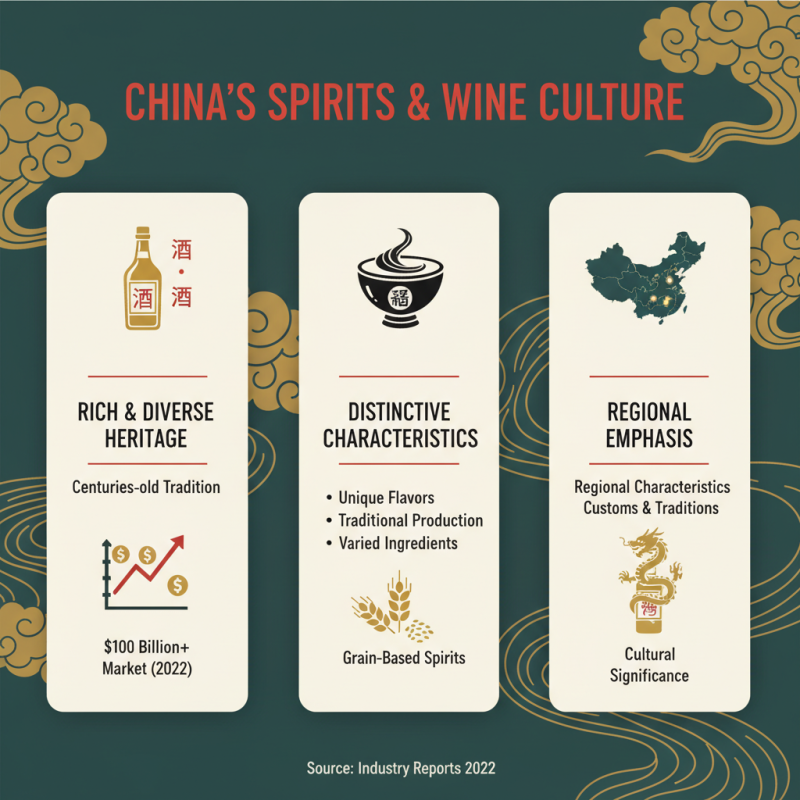
China's spirits and wine culture is rich and diverse, showcasing a deep-rooted tradition that spans centuries. With a booming market, the Chinese spirits industry generated over $100 billion in 2022, emphasizing its global significance. Distinctive flavors, unique production methods, and a variety of ingredients define this heritage. For instance, grain-based spirits often embody regional characteristics and customs.
Chinese baijiu is a prime example, often produced in small quantities. It reflects local terroir, with flavors ranging from sweet to pungent. It’s made from sorghum, rice, or even wheat. Reports indicate that in 2021, baijiu accounted for approximately 30% of the global spirits consumption. However, many consumers remain unaware of its complexities.
Similarly, wine culture in China is on the rise. Though initially influenced by Western styles, it now exhibits a unique Chinese identity. Domestic vineyards are experimenting with indigenous grape varieties. Data suggests that China’s wine market is predicted to grow at a CAGR of 9% by 2026. Yet, challenges such as quality consistency persist. Many products still fail to meet international standards, highlighting an area for improvement. Understanding these intricacies helps appreciate the evolving spirit of China's beverage landscape.
China's regions for spirits and wine production are diverse and rich in culture. The western provinces like Sichuan and Yunnan are famous for their unique flavors and traditional brewing methods. The fertile land and varied climate enhance the taste profiles of these spirits. Local ingredients often play a pivotal role in shaping the final product.
In Ningxia, the influence of climate on grape cultivation cannot be ignored. The region boasts unique terroirs that produce exceptional wines. This area is gaining recognition for its quality, yet it still competes with renowned wineries globally. Tourists may overlook smaller local producers who offer excellent options. Understanding the nuances of each region encourages deeper appreciation.
Many consumers focus only on well-known brands, often missing hidden gems. Authentic experiences lie in exploring less commercialized areas. Knowledge of local traditions enhances the enjoyment of every sip. Each bottle tells a story of its origins, making exploration worthwhile. Patience and curiosity are essential when discovering China's vibrant spirit and wine landscape.
Baijiu, a traditional Chinese spirit, has surged in popularity. Its unique flavors and cultural significance attract both local and global consumers. Industry reports indicate that Baijiu represents a significant share of the global spirits market, with nearly 40% of China's market value in 2022. This rise shows the growing interest in authentic Chinese products abroad.
Various notable Baijiu brands have emerged, showcasing regional styles and heritage. Many consumers are captivated by the distinct production methods. However, the industry faces challenges. For instance, younger generations may overlook Baijiu in favor of Western spirits. Marketers must balance tradition with modern preferences to appeal to these consumers.
In recent years, exports of Baijiu have grown. Reports indicate that international sales reached approximately $1 billion in 2021. Yet, there remains uncertainty around how to ensure quality and authenticity across different markets. Addressing such issues is crucial for brands aiming for global recognition. This balancing act requires ongoing reflection and adjustment within the industry.
| Brand Type | Alcohol by Volume (ABV) | Flavor Profile | Production Region | Price Range (USD) |
|---|---|---|---|---|
| Baijiu | 40%-60% | Strong, Aromatic | Sichuan, Jiangsu | 20-300 |
| Huangjiu | 10%-20% | Sweet, Savory | Zhejiang, Jiangsu | 15-100 |
| Mijiu | 10%-20% | Sweet, Fruity | Shanghai, Anhui | 10-80 |
| Vodka | 35%-50% | Clean, Neutral | Northeast China | 5-200 |
China's wine industry is experiencing rapid growth. New regions are emerging, and with them, fresh brands that deserve attention. Particularly, areas like Ningxia and Xinjiang are making waves. They offer distinct terroirs, ideal for grape cultivation. These regions boast varying climates, which influence grape flavors and characteristics.
In Ningxia, the sun-drenched days and cooler nights create perfect conditions for ripe grapes. Local winemakers employ traditional techniques while also integrating modern practices. This blend enhances quality and yields unique wines. However, some wineries struggle with consistency. Quality control remains a challenge, as not every bottle meets high standards.
Xinjiang, known for its vast landscapes, offers a different experience. The region’s elevation influences grape development significantly. Some winemakers experiment with varietals that are lesser-known elsewhere. This adventurous spirit can lead to remarkable results, but it can also lead to uncertainty. The learning curve for winemakers is steep, and many must adapt quickly to market demands.
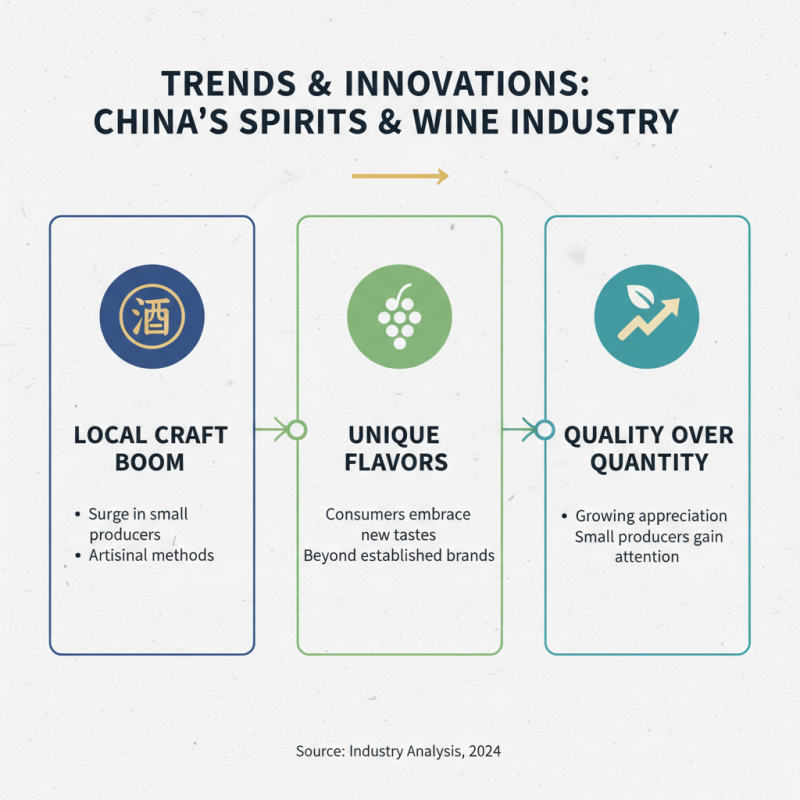
The spirits and wine industry in China is evolving rapidly. Recent trends show a surge in local craft options. Consumers are now embracing unique flavors, not just established brands. Small producers are gaining attention for their artisanal methods. This shift reflects a growing appreciation for quality over quantity.
Innovation plays a key role in this transformation. Techniques like fermentation with local ingredients create distinct profiles. Sustainable practices are becoming the norm. Many producers are focusing on eco-friendly packaging. This resonates well with the younger, environmentally-conscious consumers. They are willing to pay for products that align with their values.
**Tip:** Explore local markets. You may discover emerging brands that offer unique experiences. Pay attention to seasonal flavors; they often reveal cultural significance. Consider attending tasting events to deepen your understanding. Engaging with brands directly can foster meaningful connections.