Top Thermal Paper Labels Suppliers for Global Buyers?
Thermal Paper Labels are small components with outsized consequences. A faded barcode can slow a warehouse line. Poor adhesion can leave cartons unreadable after a rough delivery. For global buyers, choosing a supplier is therefore about more than the quoted price. It means checking coating consistency, roll dimensions, print performance, and dependable lead times.
Grand View Research estimates that the global thermal paper market exceeded USD 4 billion in 2023 and projects continued growth through 2030. Its market analysis points to steady demand across retail, transportation, and logistics. Smithers’ research on thermal papers also tracks changing material requirements and market pressures. These reports offer useful context, but they do not certify any individual supplier. That distinction matters.
This guide examines leading Thermal Paper Labels suppliers for buyers comparing production capacity, customization, quality controls, and export experience. Ask for current specifications, sample rolls, and clear test results. Check how labels perform on your own printer and packaging surface. A glossy sample is not enough. Humidity, storage time, and handling can change the result, and supplier claims may not tell the whole story. The right partner should answer practical questions plainly, support repeat orders, and flag limitations before they become costly surprises. Even then, no shortlist replaces a real production trial.
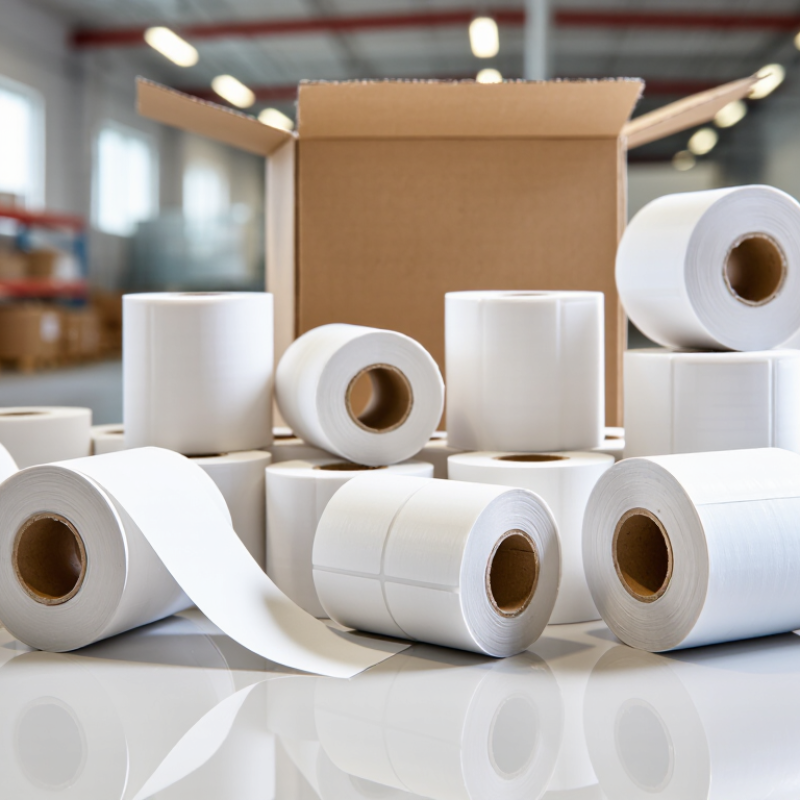
What Thermal Paper Labels Are and How They Work
Thermal paper labels carry a heat-sensitive coating that changes color when exposed to a heated printhead. In a direct thermal printer, tiny elements heat selected dots, forming text, barcodes, or simple graphics on the label. No ink cartridge is needed. The process is quick, and the printed result appears immediately.
Look closely at a freshly printed label: dark marks form where the printhead touched the coating, while untouched areas stay pale. Simple, but precise. Direct thermal labels suit shipping, retail, and short-term tracking when fast printing matters. Heat, sunlight, and friction can gradually darken or fade the image, so storage conditions affect readability. Thermal transfer printing works differently: heat moves ink from a ribbon onto the label. Buyers should check which method their printer supports, along with label size, adhesive, and surface compatibility. A label that sticks well to a clean carton may lift from a cold or dusty container. A useful reality check: “thermal” alone does not guarantee long-lasting print. Test samples in the actual environment before choosing a label for critical records.
Common Uses and Key Performance Requirements
Thermal paper labels appear on parcel cartons, retail shelves, takeaway containers, and warehouse bins. They help staff scan stock quickly and keep orders moving. Direct thermal printing uses heat-sensitive coating, so it needs no ink ribbon. That simplicity is useful. But printed images can fade when exposed to heat, sunlight, or friction.
The right label depends on its job. Shipping labels need clear barcodes and adhesive that stays attached to corrugated cartons during handling. Shelf labels need legible text under bright store lighting. Labels used on chilled packages must tolerate moisture and temperature changes. Small details matter. A label that prints well in a warm office may curl or lose adhesion in a cold room.
Buyers should check printer compatibility, roll width, core size, coating quality, and adhesive type. Print contrast matters, but so does barcode readability after scanning and handling. Ask for samples and test them on the actual printer and packaging surface. Test before scaling. This step can reveal jams, smudging, or peeling that a specification sheet may not show. Durability always involves trade-offs: stronger coatings or adhesives may add cost, and no thermal label suits every environment.
How to Assess Thermal Paper Label Suppliers
Thermal paper labels can look identical on a supplier’s sample sheet, yet perform differently on a moving production line. Assess suppliers with the label’s actual use in mind: printer type, surface material, exposure to heat, and expected storage period. Ask for coating and adhesive specifications, not just a broad claim of “premium quality.” Details matter.
Request samples in the required width, roll direction, core size, and winding format. Test them on your own printer. Check for dark, even text, clean edges, and reliable feeding at normal speed. Then expose a few labels to sunlight, friction, or cold storage if those conditions apply. Watch for fading, smudging, or corners lifting. Small tests can reveal costly problems. Keep records.
A capable supplier should explain material choices clearly and provide consistent batch records, realistic lead times, and a process for handling defects. Ask how changes in coating or adhesive are communicated. Compare quotations carefully; a low price may exclude packaging or inspection steps. A polished brochure is not proof. Even experienced buyers can miss a mismatch between adhesive and packaging surface, so document test results and revisit them when specifications change.
Leading Suppliers for Buyers in Global Markets
For global buyers, a thermal-paper label supplier must deliver more than a low quotation. Grand View Research valued the global thermal paper market at USD 4.1 billion in 2022 and projected 5.1% annual growth from 2023 to 2030. That growth raises the stakes for dependable capacity, consistent coating, and clear batch documentation. The World Bank’s 2023 Logistics Performance Index assessed 139 economies, including their tracking and tracing capabilities. Buyers should therefore ask suppliers for lot-level records, production lead times, and shipment updates—not just a product brochure.
A practical qualification check starts with the real label. Test a sample roll in your printer, then check barcode readability, adhesive hold, and print contrast after exposure to heat and light. Ask for specifications covering roll width, core size, winding direction, and storage conditions.
These details sound small. They prevent costly line stoppages. Compare suppliers on total landed cost, including freight, protective packaging, and replacement terms. Regional stock can shorten replenishment, while a distant factory may offer broader custom options. Neither is automatically better.
I would still question any supplier promising identical performance across every printer; paper, settings, and storage can change the result.
How to Compare Quality, Compliance, and Delivery Options
Comparing thermal paper label suppliers starts with the finished label, not a glossy product sheet. Check coating consistency under bright light, then print the same barcode across several rolls. Scan it with a handheld reader. Small differences matter. Look for sharp edges, even darkness, and minimal residue on the printhead. Test adhesive on the actual packaging surface, including chilled or slightly damp cartons if those are part of your workflow. A label that sticks to glass may lift from textured plastic.
Ask for current technical data, material details, and test records relevant to your application and destination market. For sensitive uses, confirm that the specific face stock, adhesive, and intended contact conditions are documented; do not assume every thermal label is suitable. Request batch identification and a clear process for handling quality complaints. Even a clean sample can mislead. A short production run may reveal variation that one roll hides, and that is an awkward detail buyers sometimes overlook.
Delivery comparisons should include more than quoted lead time. Confirm minimum order quantities, production capacity, shipping terms, moisture-resistant packaging, and how delays are communicated. Ask whether repeat orders can match the approved sample. Keep one retained sample and record its print settings, dimensions, and adhesive performance. It takes a little effort. But it makes supplier discussions more specific, and exposes gaps before labels reach the packing line.