What Are the Top Types of Flat Bottom Pouches?
Flat Bottom Pouch packaging combines a stable base with broad front and back panels. That simple structure can stand upright on a crowded shelf, hold its shape, and display a brand clearly. Yet “flat bottom pouch” describes a format, not one fixed design. The details matter.
Packaging development consultant Daniel Mercer puts the choice this way: “Start with the product’s needs; let the pouch shape follow.” This is a practical design principle, not a substitute for product-specific testing. A zipper may help with repeated opening. A transparent window can show the contents, while a high-barrier laminate may better suit products sensitive to moisture or oxygen. Each choice brings trade-offs. A window, for example, can reduce the area available for printed information.
This guide introduces the top types of Flat Bottom Pouch, including standard styles, resealable versions, window designs, and options with added barrier protection. It will compare their structures, common uses, and everyday handling. Picture a pouch standing beside a coffee tin, its gussets opened and base resting flat. Small design details affect how it fills, travels, and sits on a shelf. There is no single best type. The right choice depends on the product, filling process, storage conditions, and customer habits. Even a promising concept can disappoint if its seal or material is poorly matched. That deserves careful attention.
Flat Bottom Pouch Design and Classification
What Are the Top Types of Flat Bottom Pouches?
Flat Bottom Pouch Design and Classification
A flat bottom pouch has a broad, stable base, a front and back panel, and folded side gussets. Together, these panels create a box-like shape that stands upright on a shelf. Many designs use five printable panels, though the exact layout varies by manufacturer. That difference matters when planning artwork and shelf presentation.
Pouches can be classified by their closure and material structure. Common closures include a heat-sealed top or a resealable zipper. Material options range from simpler films to layered structures designed to provide stronger barriers against moisture, oxygen, or light. Choose according to the product’s needs, filling process, and expected storage conditions. A high-barrier structure is not automatically necessary.
Some formats include extra features, such as a tear notch or a one-way valve for products that release gas. These can improve handling, but they add design considerations. A flat base does not guarantee perfect stability; pouch dimensions, fill weight, and seal quality all play a part. I would test filled samples on an actual shelf before settling on a final format. Small details can disappoint. Recyclability also depends on the material combination and local collection options, so avoid assuming every pouch is widely recyclable.
Zipper-Closure Flat Bottom Pouches
Zipper-closure flat bottom pouches combine a stable base with an opening that can be sealed again. The broad bottom helps the pouch stand on a shelf or counter, while the zipper keeps the top accessible after opening. This format is often used for dry foods, coffee, and small household products. It can make storage neater, though the pouch still needs suitable barrier layers for the product inside.
The details matter. A zipper should align cleanly and close with steady pressure, not force. Try opening and closing samples with the actual product; fine powder or crumbs near the track can prevent a good seal. A small tear notch may make the first opening easier. Check that the pouch stands when partly filled, too. It may slump.
There is a trade-off. Zippers add material and can take up room near the top seal. They also do not replace careful heat sealing during packing. In practice, pouch size, film thickness, fill weight, and zipper position all affect handling. A sample test on a real shelf can reveal issues that a flat product drawing misses. Even a well-made pouch can feel awkward if the zipper is too close to the contents.
Valve-Equipped Flat Bottom Pouches
Valve-equipped flat bottom pouches pair a stable, box-shaped base with a valve designed for a specific filling or venting need. The valve’s role depends on the product and packaging line. During filling, a suitable valve can help release trapped air and support a cleaner, more controlled process. That matters with powders that puff or settle unevenly. The flat base also lets a filled pouch stand upright on a shelf or work surface. Useful, but not magic. Fine particles can still clog a valve or escape through a poor seal.
Choose the valve and pouch material together, not as separate features. A coarse granular product may behave differently from a light, dusty powder. Ask the packaging supplier to confirm compatibility with the product, filling equipment, and expected storage conditions. Then run a small production trial. Check for leakage, stable filling, and whether the pouch remains upright after handling. Valve placement deserves attention too; an awkward position can make filling slower or sealing less reliable. Real-world trials may reveal issues that a specification sheet misses.
Windowed Flat Bottom Pouches
What Are the Top Types of Flat Bottom Pouches?
Windowed Flat Bottom Pouches
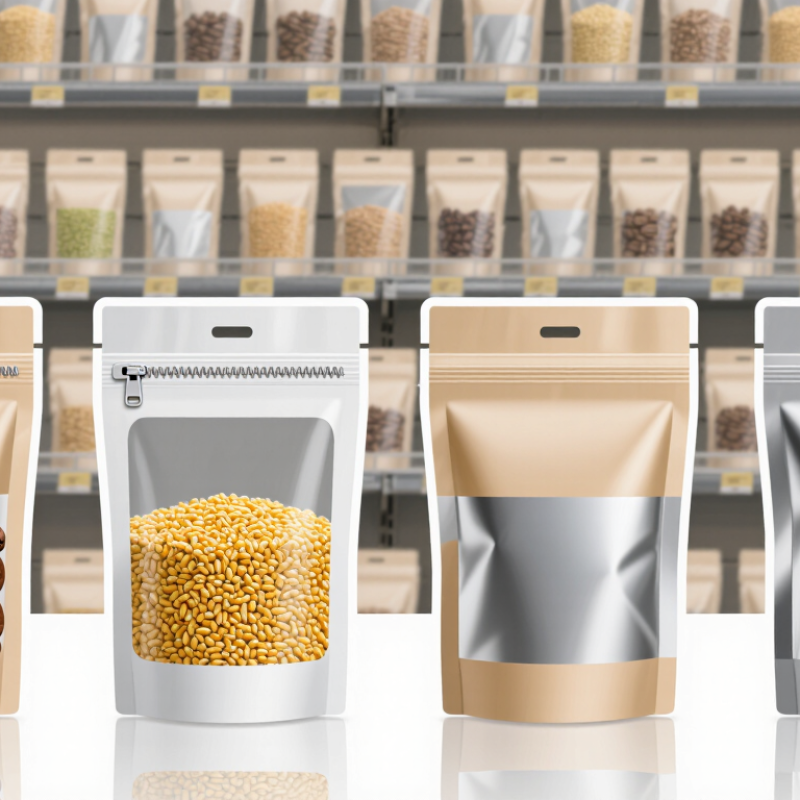
A clear window lets shoppers see the product before opening the pouch. In a flat-bottom design, the wide base helps the package stand upright, while the visible contents can add texture and color to a shelf display. Think whole coffee beans, dried fruit, or colorful grains. That matters.
Window placement and film choice affect both appearance and protection. A broad window offers more visibility, but can reduce the space available for printed information and may complicate barrier design. Ask the converter how the window is sealed and whether the finished pouch protects against oxygen, moisture, and light. The right specification depends on the product, not just the shelf.
Industry data gives useful context, though it does not measure windowed pouches alone. The Flexible Packaging Association’s 2023 State of the U.S. Flexible Packaging Industry report estimated U.S. flexible packaging sales at $42.9 billion in 2022. Grand View Research valued the global flexible packaging market at $261.5 billion in 2023 and forecast growth through 2030. These figures show the scale of flexible packaging, not proof that a window increases sales. A window is a compromise, not a free upgrade. Check product shelf-life needs, seal quality, and window clarity with physical samples; printed mockups can hide glare and distortion.
What Are the Top Types of Flat Bottom Pouches? - Windowed Flat Bottom Pouches
| Pouch Type | Window Configuration | Typical Material Structure | Best Suited For | Key Consideration |
| Front-Panel Window | A clear area on the front face, commonly a vertical or rectangular panel. | Printed outer film laminated to a food-contact sealant layer, with a clear film section forming the window. | Coffee, grains, pasta, nuts, and other products where shoppers benefit from seeing the contents. | The window reduces the area available for printing and may offer less protection from light than an opaque panel. |
| Narrow Vertical Window | A slim transparent strip running vertically along the front or near one side. | Printed laminated film with a clear polymer window and a heat-sealable inner layer. | Small snacks, seeds, dried fruit, and products that need a modest viewing area. | A narrow window preserves more printable surface while showing only a limited portion of the contents. |
| Wide or Panoramic Window | A broad transparent section across much of the front panel. | Clear barrier-capable laminate or a clear window integrated into printed laminated film; structure depends on the product’s shelf-life needs. | Visually distinctive products such as colorful confectionery, granola, and specialty dry foods. | A larger exposed viewing area can make light and oxygen protection more dependent on the selected film structure. |
| Shaped or Die-Cut Window | A custom-shaped clear area, such as a circle, oval, or simple product-related outline. | Printed flexible laminate with a clear polymer window; the exact layers are chosen for the required barrier and sealing performance. | Giftable dry foods, baking ingredients, and products where a distinctive package appearance is useful. | The shape and placement should leave enough material around seals and folds for reliable pouch construction. |
| Kraft-Look Pouch with Clear Window | A transparent strip or panel set into a kraft-paper-look outer surface. | Paper laminated to polymer films, with a clear window section; paper alone is generally not a complete moisture or oxygen barrier. | Tea, coffee, baking mixes, and dry pantry products seeking a paper-like appearance. | Confirm the full laminate structure and local recycling guidance; a paper exterior does not necessarily make the pouch recyclable as paper. |
Material suitability and barrier performance vary by product, filling conditions, and required shelf life. Final specifications should be confirmed with packaging tests and applicable food-contact requirements.
Tin-Tie and Heat-Seal Flat Bottom Pouches
Flat bottom pouches stand upright on shelves and provide a broad front panel for product details.
Two common closure choices are tin ties and heat seals. A tin-tie pouch usually has a folded top with a small metal strip. After opening, shoppers can roll the top down and fold the strip around it. It is convenient for repeated access, but it does not create an airtight closure. Crumbs and aroma may escape if the pouch is not stored carefully.
Heat-seal pouches close when their inner layers are pressed together with heat. The result is a sealed top edge that can help protect freshness before opening. It is not resealable unless the pouch also has a zipper or another closure.
The Flexible Packaging Association’s 2024 State of the U.S. Flexible Packaging Industry report puts U.S. flexible-packaging sales at $42.9 billion in 2023, showing the scale of this packaging category. That figure covers flexible packaging broadly, not flat-bottom pouches alone.
For a product opened daily, a tin tie can be handy; for a longer unopened shelf period, a heat seal may be preferable. Check the seal quality and pouch material with actual product samples. Small details matter. A weak seal or awkward fold can frustrate customers, and neither closure suits every product.