

Frugalpac terms and conditions for the purchase of goods

Why Choose QR Code Packaging Bags for Your Products?

Packaging does more than protect a product; it can also guide what happens after purchase. A Qr Code Packaging Bag gives customers a quick way to reach product details, care instructions, usage tips, or a brand’s contact page. The printed code might sit beside a short prompt, such as “Scan for care tips,” on a pouch of coffee or a reusable household product. Keep it clear and useful.

The value depends on what customers find after scanning. A code that opens a slow, crowded page can frustrate people, even when the packaging looks polished. Choose a destination that works well on a phone, loads quickly, and answers a real question. Then test the printed code on the finished bag, not only on a computer screen. Check it under ordinary lighting and from a comfortable scanning distance. Small details matter.

There are practical limits, too. A fold, glossy finish, dark print, or cramped placement may make scanning harder. Ask your packaging supplier about suitable print areas and materials, and confirm that the code remains readable after handling. If the linked page changes, review it regularly; a QR code cannot make outdated information trustworthy. Not every product needs one. The best choice is a code that adds something customers genuinely want, rather than another graphic competing for space. A little restraint helps.
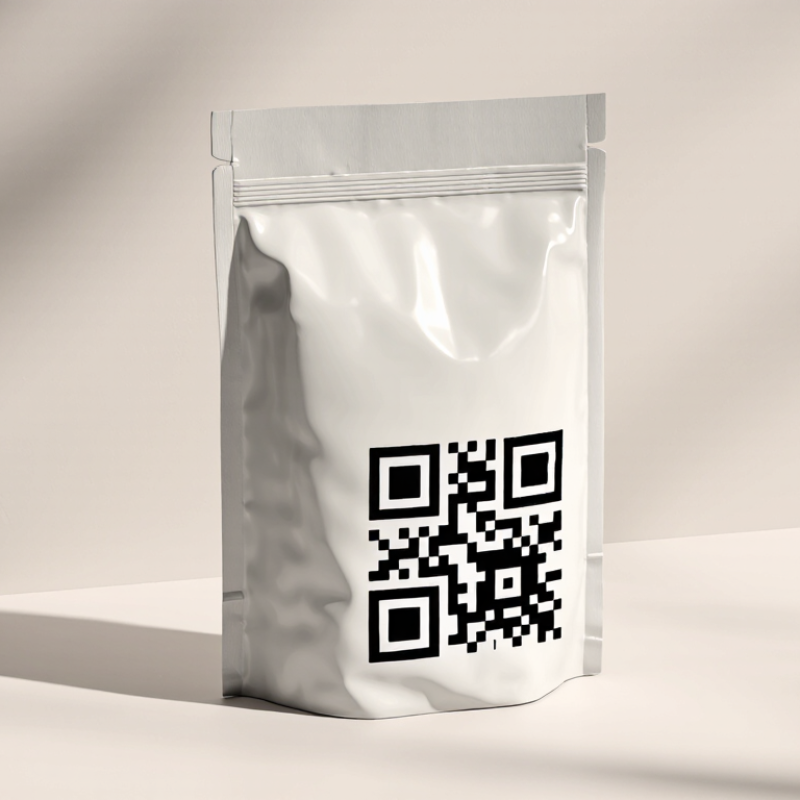
Why Choose QR Code Packaging Bags for Your Products?

What QR Code Packaging Bags Are and How They Work

QR code packaging bags carry a printed, two-dimensional code that connects a physical package with digital product information. A phone camera reads the pattern and opens a web address or displays encoded text. The destination might show ingredient details, care instructions, sourcing information, or recycling guidance. The code does not hold an entire product story; it usually points to one. GS1’s guidance on 2D barcodes describes how codes can link product identifiers with online information, making the package a useful entry point.

The process is simple, but it depends on a clear print and a working link. A smudged code, a fold across its squares, or a slow-loading page can interrupt the scan. That matters. An Insider Intelligence forecast estimated that 99.5 million U.S. smartphone users would scan QR codes in 2025. That figure suggests familiarity, not guaranteed engagement with every package. Place the code on a flat, visible area, test it on several phones, and keep the linked page current. A QR code can make details easier to reach, but it cannot make unclear information trustworthy.

What Information QR Codes Can Share With Customers

A QR code on a packaging bag can give customers useful details without crowding the printed design. A quick scan might open a page with material information, care instructions, or clear steps for using the product. For a food storage bag, that could mean washing guidance and temperature limits. Keep instructions specific and easy to follow.

It can also share product origin details, packaging disposal guidance, and answers to common questions. A short video may show how to seal a reusable bag properly; a readable text version helps people who cannot watch it. Keep the page mobile-friendly. Nobody wants to pinch and zoom.

The code should lead to accurate, current information, and the printed bag should still show essential details. Not everyone scans. A practical test is to scan the code under ordinary shop lighting, using a phone with a slower connection. Check that the destination loads and the text remains legible. QR codes can make packaging more informative, but they cannot fix confusing instructions or stale web pages. That part takes upkeep.

Why Choose QR Code Packaging Bags for Your Products? — What Information QR Codes Can Share With Customers

Information Type What the QR Code Can Share How It Helps Customers Example for a Packaging Bag
Product details A webpage with the product name, description, materials, dimensions, or intended use. Provides more detail than may fit on the printed packaging and helps customers review product information. Scan to view the product description and size guide.
Instructions and care Setup steps, usage instructions, cleaning guidance, or storage recommendations. Makes practical guidance easy to access when customers need it. Scan for instructions on using and storing the product.
Ingredients or materials A digital list of ingredients, components, or material information, where applicable. Gives customers another way to review product composition and related details. Scan to see the full ingredient or material list.
Allergen and safety information Additional allergen, handling, warning, or safety guidance relevant to the product. Can make supporting information easier to find. Required information should still appear on the packaging when regulations require it. Scan for additional safety guidance and handling notes.
Origin and sourcing Available information about where a product or its materials come from and how they are sourced. Helps customers learn more about product origin when accurate, verified details are available. Scan to read the product’s sourcing information.
Environmental guidance Instructions for sorting, recycling, reuse, or disposal of the product and its packaging. Helps customers find disposal guidance that may depend on local recycling facilities. Scan for packaging material and disposal guidance.
Batch or freshness information A digital page displaying relevant batch, production, or freshness details when connected to a maintained information system. Can provide additional context about a particular product batch. Scan to view batch-related product information.
Frequently asked questions Answers to common questions about product features, use, storage, or packaging. Lets customers find helpful answers without searching through printed materials. Scan to browse product FAQs.
Support and contact options A support page, contact form, email link, or other customer service information. Offers a direct route to assistance if a customer needs help. Scan to contact customer support.
Product updates A webpage that can be updated with current instructions, notices, or other relevant product information. A linked webpage can be revised without reprinting the QR code, provided the destination remains active. Scan for the latest product information.

Note: A QR code can encode text or direct a device to digital content, such as a webpage. Customers generally need a camera-enabled device, and online content requires an internet connection. Keep essential safety and legally required information clearly printed on the packaging.

How QR Code Bags Improve Product Traceability and Engagement

A QR code on a packaging bag can connect a physical product to useful batch information. A shopper scans the code with a phone camera and can view details such as a production date, ingredient or material information, and handling guidance. For retailers and manufacturers, linking each code to organized records can make it easier to trace a batch when a quality question arises. The code alone does not create traceability. Accurate records and consistent updates do.

Placement matters. A code near the back seam may wrinkle or become hard to scan, while a clear, high-contrast print on a flat panel is easier to use. Test it on the finished bag, not only on a screen. Small type and glossy glare can frustrate people. That detail is easy to miss.

QR code bags can also invite ongoing engagement. A landing page might show a simple product story, preparation ideas, or care instructions, without requiring an app. Scan data can indicate which pages attract attention, but it should be interpreted carefully: a scan does not always mean a purchase or satisfaction. Keep information current, make the page quick to load, and explain what data is collected. A QR code is not magic. It works best when the information behind it is useful, clear, and maintained.

Which Products Benefit Most From QR Code Packaging

Fresh foods, cosmetics, and household goods benefit most when packaging must explain more than a label can hold. A QR code on a salad bag can open harvest details, storage guidance, and allergen information. On a face cream pouch, it can show ingredient explanations and use instructions. Useful, not flashy.

The 2016 Label Insight Food Revolution Study found that 94% of surveyed consumers said they would be more loyal to brands offering complete transparency. That finding supports QR-linked product details, though it does not prove that a code alone builds trust. The page behind it must be clear, current, and easy to read on a phone. A broken link undermines the message.

QR packaging can also help products with changing batches, such as coffee, supplements, and seasonal produce. A scan may reveal origin, batch-specific quality checks, or recycling guidance without crowding the printed pouch. GS1’s Sunrise 2027 initiative is preparing retail systems to read 2D barcodes, reflecting wider industry interest in richer product data. Still, not every shopper scans. Keep essential directions and safety details on the package itself; digital content should add value, not hide them.

What to Consider When Choosing QR Code Packaging Bags

Why Choose QR Code Packaging Bags for Your Products?

What to Consider When Choosing QR Code Packaging Bags

A QR code is useful only when customers can scan it easily. Check the printed code on the actual bag, not just on a digital proof. Glossy films can reflect overhead lights, while textured or flexible surfaces may distort small squares. Test several bags under ordinary indoor lighting. Small details matter.

Choose a code size that suits the package and the likely scanning distance. Leave clear space around the code, and avoid placing it across folds, seals, or curved edges. High contrast usually helps; dark codes on a light, unpatterned area are a practical starting point. Ask for samples before approving a full production run. A code that scans on a desk can fail when a bag is crinkled or held at an angle.

Consider what customers will find after scanning. The destination should load quickly on a phone and remain useful over time. If the page may change, confirm that the link can be updated and who will maintain it. Explain the QR code’s purpose with a brief label, such as “Scan for care instructions.” Test the link after printing, too. It is easy to overlook, but a neat-looking code is not proof that it works.

Why Choose QR Code Packaging Bags for Your Products?

What to consider: selecting an error-correction level that suits the packaging and expected handling conditions.

Higher error correction can help a QR Code remain readable when part of it is damaged or obscured, but it also increases the code’s size for the same amount of data. Choose a level based on print quality, expected wear, and available space. Rates shown are approximate.

Close