

7 Best Ways to Reduce the Wine Carbon Footprint
A wine bottle carries more than its vintage. Its climate impact begins in the vineyard and follows it through harvest, fermentation, packaging, and delivery. Fertilizer, tractor fuel, cellar electricity, glass production, and long-distance shipping can all add emissions. The wine carbon footprint is not identical for every bottle; grape variety, climate, winery choices, and packaging all matter. Miguel A. Torres, president of Familia Torres, has described climate change as “the biggest threat to the wine industry.” That warning gives sustainability a practical urgency. It also invites a careful question: where can a winery reduce emissions without compromising wine quality or worker safety?
This guide explores seven useful approaches: improving vineyard soil and input management, using renewable energy, upgrading cellar efficiency, choosing lighter packaging, reducing water and material waste, planning lower-emission transport, and measuring results. Some changes are visible, like a lighter bottle on a shop shelf. Others are quieter, like efficient refrigeration humming through a warm harvest night. Start with the largest emissions sources, then track whether each change makes a measurable difference. Small adjustments can help. Yet there is no universal fix, and a lighter bottle alone does not make a wine sustainable. Carbon accounting also has limits; data may be incomplete, and suppliers do not always share reliable figures. The goal is not a perfect claim. It is a clearer baseline, better decisions, and steady progress that can be checked over time.
Understanding the Main Sources of Wine’s Carbon Footprint
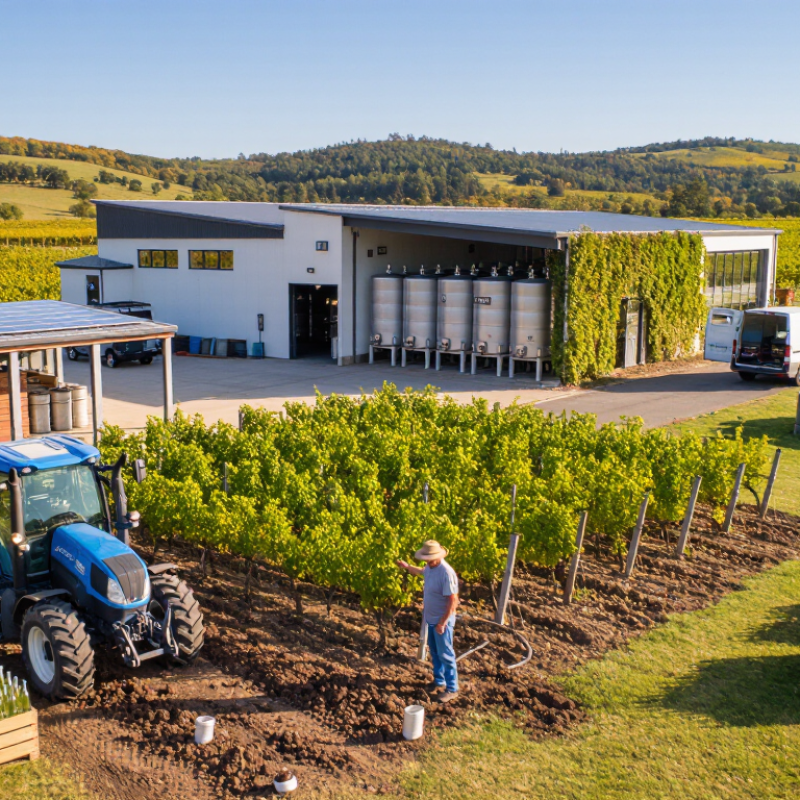
A wine’s carbon footprint starts well before it reaches a glass. In the vineyard, diesel-powered tractors, fertilizer production, and irrigation pumps use energy. Nitrogen fertilizers can also lead to nitrous oxide emissions from soil. The scale varies with climate, farming methods, and vineyard location. No single source dominates every wine.
Packaging can add substantially to the total. Heavy glass bottles require more material and fuel to manufacture than lighter packaging. Moving cases by truck, ship, or air adds emissions, especially over long distances. Winery electricity for cooling, bottling, and storage matters too. It adds up.
Tips: Look for lighter bottles and locally produced wine when practical. Choose nearby options, but remember that packaging and farming practices also shape the footprint. Ask producers how they manage energy and vineyard inputs.
Comparisons can be tricky. A bottle shipped far by sea may have a different transport impact from one hauled a shorter distance by truck; packaging weight still matters. Carbon estimates also depend on what a study includes, such as refrigeration or retail storage. I would not treat one label or number as the whole story. Some details remain hard to compare, and that is worth keeping in mind.
7 Best Ways to Reduce the Wine Carbon Footprint - Understanding the Main Sources of Wine’s Carbon Footprint
| Main Emissions Source | Why It Matters | Practical Reduction Strategy | Useful Indicator to Track |
|---|---|---|---|
| 1. Bottle and packaging materials | Making glass requires high-temperature furnaces, and heavier bottles use more material and fuel during production and transport. | Use lighter glass where appropriate, increase recycled content, and avoid unnecessary secondary packaging. Refillable systems can help where collection and reuse infrastructure is available. | Packaging weight per bottle; recycled content; share of bottles reused. |
| 2. Freight and distribution | Moving wine consumes energy. Emissions depend on distance, transport mode, load efficiency, and whether shipments travel by road, sea, rail, or air. | Plan fuller shipments, favor lower-emission transport modes where practical, and avoid air freight when timing allows. Assess total logistics rather than distance alone. | Transport mode; shipment load factor; freight emissions per case or litre. |
| 3. Vineyard fertilizers and soil management | Nitrogen fertilizer production uses energy, and nitrogen applied to soils can produce nitrous oxide, a potent greenhouse gas. | Match fertilizer applications to crop needs, use soil and plant testing, prevent excess application, and consider cover crops or other locally suitable soil practices. | Nitrogen applied per hectare; fertilizer use per tonne of grapes; soil-management practices. |
| 4. Vineyard fuel and machinery | Tractors and other equipment burn fuel for tasks such as spraying, mowing, and transporting grapes. | Reduce unnecessary passes through the vineyard, maintain equipment, coordinate field operations, and evaluate lower-emission equipment when it suits the work. | Fuel used per hectare or tonne of grapes; number of machinery passes. |
| 5. Winery electricity and heat | Crushing, pumping, lighting, heating, and other cellar operations require energy; the emissions impact depends partly on the local electricity supply. | Improve equipment efficiency, fix compressed-air and refrigeration leaks, monitor energy use, and source renewable electricity where available. | Electricity and fuel use per litre of wine; share of electricity from renewable sources. |
| 6. Cooling and temperature control | Fermentation temperature control, cold stabilization, and storage can require substantial refrigeration. Refrigerant leaks can also have a high climate impact. | Use efficient cooling systems, insulate tanks and spaces, maintain refrigeration equipment, and detect and repair refrigerant leaks promptly. | Cooling energy per litre; refrigerant type; refrigerant leakage and replacement records. |
| 7. Winery water and wastewater handling | Water supply, pumping, heating, and treating winery wastewater use energy. Wastewater with organic matter also needs appropriate treatment. | Use water efficiently during cleaning, prevent unnecessary hot-water use, and treat or reuse wastewater safely in line with local requirements. | Water used per litre of wine; wastewater volume; treatment energy and performance. |
Note: The largest emissions sources vary by vineyard, winery, packaging choice, and distribution route. A consistent life-cycle assessment can help identify the most important opportunities for a particular wine.
Related Posts
-
Top 10 Types of Wine Bottle Paper for Global Buyers
-
7 Best Wine in Paper Bottles for Global Buyers?
-
5 Tips for Buying Wine in Paper Bottles
-
Top Benefits of Wine in Paper Bottles for Eco-Friendly Consumers?
-
China Best Wine Suppliers with Low Carbon Footprint
-
2026 Top Trends in Paper Wine Packaging Now Making Waves?