

What Are China Top Wine Suppliers for Global Buyers?
China’s wine industry is changing quickly, creating new opportunities for global buyers. This guide explores China’s top wine suppliers, from established producers to export-focused wineries. It considers product quality, vineyard location, production capacity, and international market experience.
Jancis Robinson MW, a respected wine authority, has said, “Wine is one of the great pleasures of life.” That pleasure requires careful sourcing. A reliable supplier should provide clear grape information, vintage details, laboratory records, and stable packaging standards. Buyers should also review export documentation, bottle specifications, labeling accuracy, and shipping performance. Small details matter. A damaged carton can become a costly market problem.
Several Chinese wine regions deserve attention. Ningxia offers high-altitude vineyards, dry conditions, and ambitious premium producers. Xinjiang provides broad vineyard resources and distinctive continental conditions. Shandong has a longer commercial winemaking history and strong processing infrastructure. Hebei and Gansu also attract buyers seeking different styles and price points. Each region presents strengths, but none guarantees success.
This is where wine global sourcing needs practical judgment. A polished website proves little. Factory visits, sample testing, and transparent communication provide stronger evidence. Buyers should compare several vintages before making commitments. They should also confirm minimum order quantities, lead times, private-label support, and after-sales responsibility.
No supplier is perfect. Even experienced exporters may struggle with changing harvest conditions or inconsistent availability. That deserves honest discussion. The best partnerships usually combine measurable quality with realistic expectations. This article offers a grounded starting point for global buyers evaluating China’s leading wine suppliers.
China’s Wine Supply Landscape and Its Role in Global Trade
What Are China Top Wine Suppliers for Global Buyers?
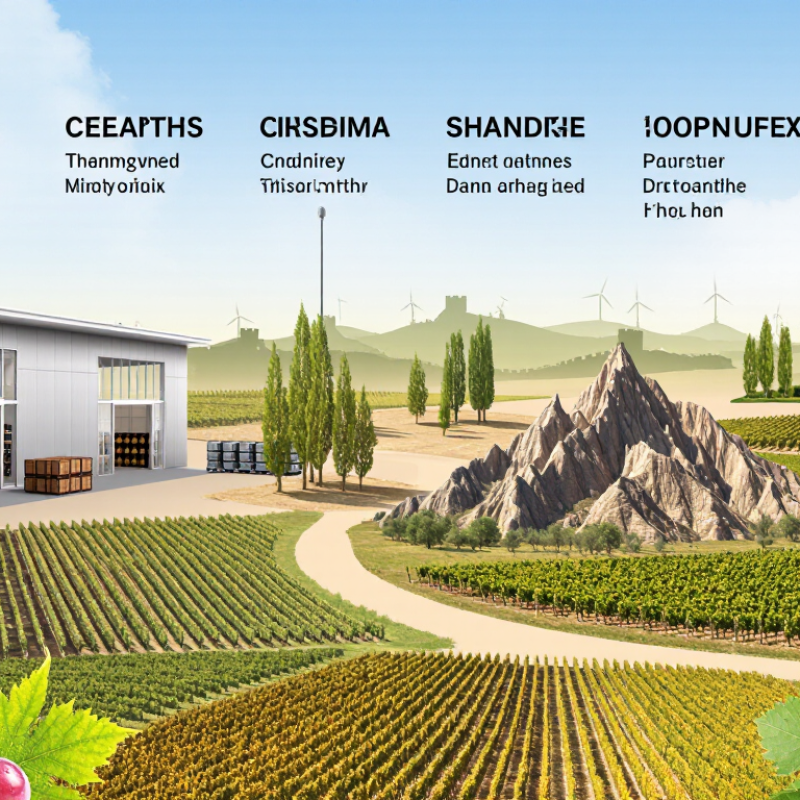
China’s wine supply landscape is becoming more diverse, regional, and export-oriented. Vineyards in Ningxia, Shandong, Hebei, Xinjiang, and Gansu offer different growing conditions. Dry sunlight, cool nights, and varied soils shape the finished wine. Some suppliers focus on bottled products, while others provide bulk wine or private-label production.
Global buyers usually assess more than price. They examine vineyard records, harvest dates, laboratory reports, packaging standards, and shipment stability. A reliable supplier should explain grape varieties, processing methods, storage temperatures, and traceability procedures. Factory visits can reveal details that brochures often miss. Clean tanks matter. So does disciplined inventory control.
China’s role in global wine trade is still developing. Domestic demand supports large production networks, while export orders encourage better quality management and international documentation. Suppliers near major ports may offer practical logistics advantages, especially for regular container shipments. However, regional strengths are not always consistent across every vintage. Weather, changing consumer preferences, and uneven export experience can affect performance. Buyers should request samples from different production lots and confirm compliance with destination-market requirements. The landscape is promising, but not perfectly uniform. Careful verification remains necessary.
| Supplier Cluster | Primary Production Areas | Climate and Terroir Profile | Main Grape Categories | Supplier Position in China | Typical Export Potential | Buyer Considerations |
|---|---|---|---|---|---|---|
| Ningxia | Eastern Foothills of the Helan Mountains | Dry continental climate, strong sunlight, low rainfall, large day-to-night temperature variation, and mountain-fed irrigation. | Red varieties such as Cabernet Sauvignon, Merlot, Cabernet Franc, and Syrah; selected white varieties are also cultivated. | China’s best-known premium wine cluster and a major focus of national wine-region development. | High potential for premium bottled wine, hospitality channels, wine tourism, and specialty retail in Asia. | Buyers should check vintage consistency, irrigation practices, cold-weather protection, certification, and export packaging capability. |
| Shandong | Penglai, Yantai, Qingdao, and surrounding coastal areas | Maritime influence, relatively moderate temperatures, and established viticultural infrastructure; some areas receive higher rainfall than inland regions. | Cabernet Sauvignon, Cabernet Franc, Merlot, Chardonnay, Riesling, and other international varieties. | One of China’s largest and most established wine-producing regions, with broad processing and distribution capacity. | Suitable for large-volume domestic supply, private-label programs, contract production, and selected export orders. | Product quality can vary by site and vintage; buyers should request laboratory reports, technical sheets, and lot-specific samples. |
| Xinjiang | Turpan, Hoxud, Manas, and other northern and eastern production zones | Very dry continental conditions, abundant sunshine, low humidity, and substantial temperature variation; winter protection may be required in some areas. | Cabernet Sauvignon, Merlot, Syrah, Muscat, Chardonnay, and table-grape-derived wine varieties. | A significant grape-growing area with strong agricultural scale and access to western and Central Asian markets. | Potential for value-oriented bottled wine, bulk wine, grape-based products, and regional trade with Central Asia. | Evaluate logistics distance, cold-chain or temperature-control requirements, harvest dates, and documentation for cross-border shipments. |
| Hebei | Huailai, Changli, and areas around the Beijing-Tianjin-Hebei economic region | Continental climate with suitable foothill and coastal microclimates; frost management and rainfall control are important in some vineyards. | Cabernet Sauvignon, Merlot, Cabernet Franc, Chardonnay, and other cool-to-moderate climate varieties. | A long-established supply base with proximity to major consumer markets, logistics networks, and hospitality buyers. | Suitable for domestic distribution, institutional procurement, tourism-related sales, and selected export projects. | Proximity to ports and large cities supports fulfillment, while vineyard-level traceability remains important for quality verification. |
| Gansu | Wuwei and the Hexi Corridor | Arid continental climate, high solar radiation, limited rainfall, and irrigation-supported vineyards. | Cabernet Sauvignon, Merlot, Syrah, Chardonnay, and other international wine-grape varieties. | An important inland production cluster with expanding vineyard acreage and processing capacity. | Competitive for mid-market bottled wine, bulk supply, and buyers seeking differentiated northwestern China origins. | Confirm water-management practices, harvest timing, transport arrangements, and the producer’s experience with export documentation. |
| Inner Mongolia | Wuhai and other dry western areas | Dry continental conditions, strong sunlight, low humidity, and significant seasonal temperature changes; winter protection is relevant. | Cabernet Sauvignon, Merlot, Cabernet Franc, and selected cold-tolerant varieties. | An emerging northern wine cluster supported by desert-edge agriculture and regional development programs. | Potential for premium regional products, private-label trials, and niche export positioning based on origin. | Assess winter-loss management, vineyard age, irrigation systems, production scale, and continuity of supply before placing large orders. |
| Yunnan | High-altitude valleys and mountain areas, including northwest Yunnan | High-elevation terrain with distinct microclimates, strong sunlight, and varied rainfall patterns across valleys and slopes. | Cabernet Sauvignon, Merlot, Cabernet Franc, Chardonnay, and other varieties selected for altitude and local conditions. | A distinctive origin for premium and high-altitude wines, with smaller but increasingly specialized supply. | Best suited to boutique imports, premium restaurant channels, wine tourism, and origin-focused marketing. | Supply volumes may be more limited; buyers should confirm annual availability, bottle specifications, and lead times. |
| Shaanxi and Shanxi | Loess Plateau and selected river-valley production zones | Continental conditions with dry growing seasons, strong sunlight, and varied elevation; local water and frost conditions differ by site. | Cabernet Sauvignon, Merlot, Cabernet Franc, Chardonnay, and other European varieties. | Developing regional suppliers with growing vineyard investment and a focus on improving production consistency. | Suitable for regional brands without company-name dependence, contract bottling, and selected mid-market export programs. | Request multi-vintage performance data because vineyard maturity and production consistency can differ significantly among suppliers. |
| National Bottling and Export Hubs | Coastal manufacturing and logistics centers connected to major Chinese ports | Not a single terroir category; these locations mainly provide processing, bottling, warehousing, customs handling, and freight access. | Wine sourced from domestic vineyards or imported bulk wine, depending on the supplier’s business model. | Important for export execution, private-label fulfillment, mixed-container orders, and international documentation. | Strongest fit for buyers prioritizing scalable packaging, port access, container consolidation, and shorter export lead times. | Verify origin labeling, bulk-versus-bottled status, customs classification, alcohol content, additives, and applicable destination-market rules. |
| China’s Export Market Profile | Outbound shipments from major coastal ports and inland production regions | Export performance is influenced by domestic consumption, vintage conditions, logistics costs, exchange rates, and destination-market regulations. | Primarily bottled still wine, with smaller volumes of sparkling wine, bulk wine, grape juice, and related products. | China is primarily a large wine-consuming market, while its domestic wine sector serves a smaller but growing export role. | Most practical opportunities are in nearby Asian markets, specialist retail, restaurants, tourism channels, and origin-focused segments. | Global buyers should compare export-ready suppliers using samples, technical files, certificates of origin, laboratory results, and shipment history. |
Related Posts
-
Why Is Global Wine Sourcing Growing Worldwide?
-

Why Choose Spirits Over Wine for Your Next Purchase?
-
2026 Best Wine and Spirits Suppliers for Global Buyers
-
China Top 10 Wine and Spirits Suppliers for Global Buyers
-
The Secrets Behind Wine in the Bottle That Every Enthusiast Should Know
-
10 Wine and Spirits Sourcing Tips for Global Buyers